Portfolio

Because Words Matter

For 14+ years, I’ve designed useful, honest, and human content for a billion-person audience—across Gmail, Google Chat, Currents, Allrecipes, Nintendo, and WildTangent.

Google: Gmail Redesign, Security Warnings, & Mail Merge

Sunnyvale, CA • Jul 2019 – Sep 2022

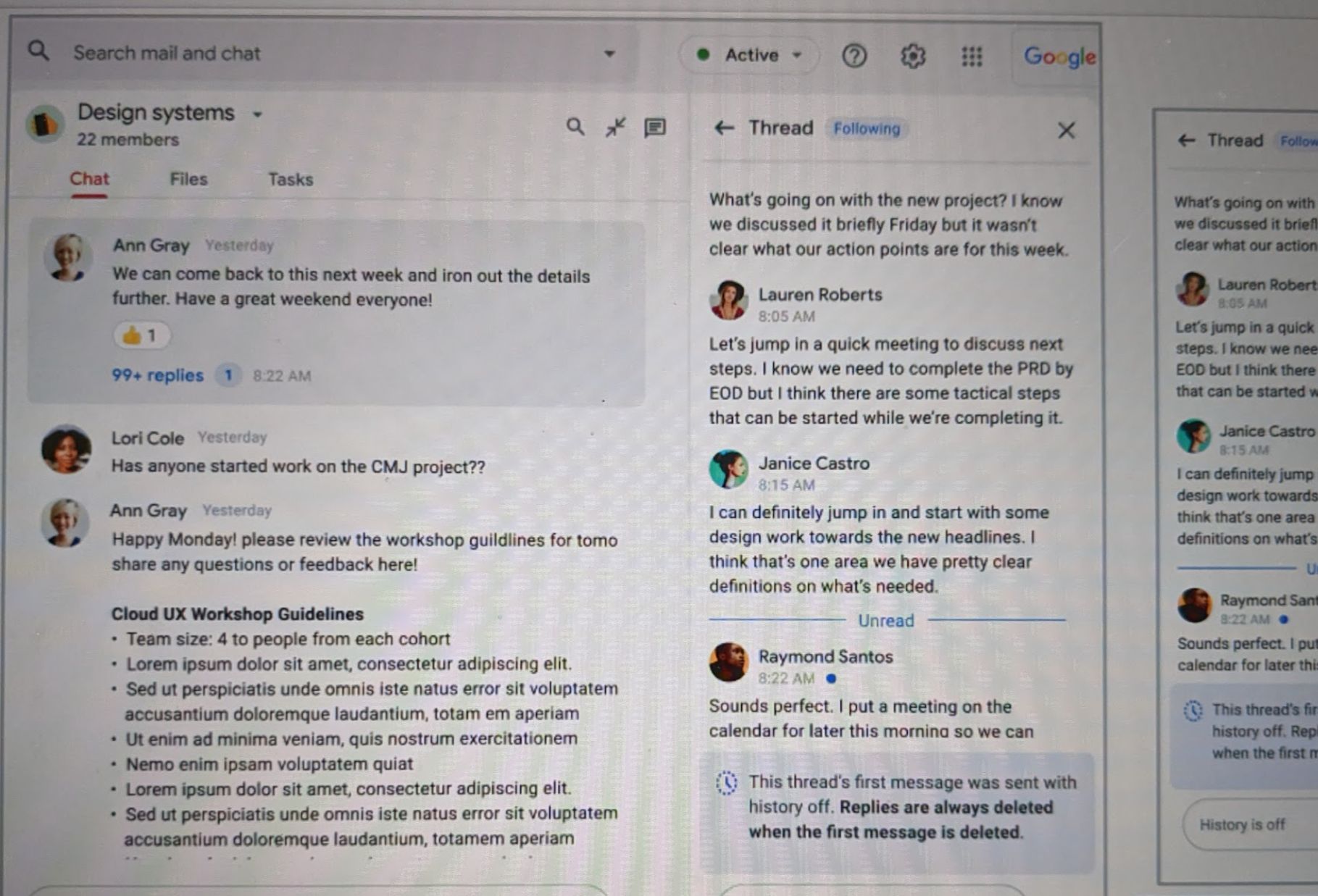
Google Chat: Threading + History, Hangouts Migration, & Cross-Functional Side Projects

Complex State Systems, Migration Architecture, String Audits, & Conversational AI
Currents & Google+: Systems & Style Guide, Product Vision, & Sunset Comms

Sunnyvale, CA • Aug 2016 – Jul 2019 • Content Systems, Naming Workshops, & Product Lifecycle
Earlier Career: Allrecipes, Nintendo, & WildTangent

Seattle & Redmond, WA • 2007 – 2016
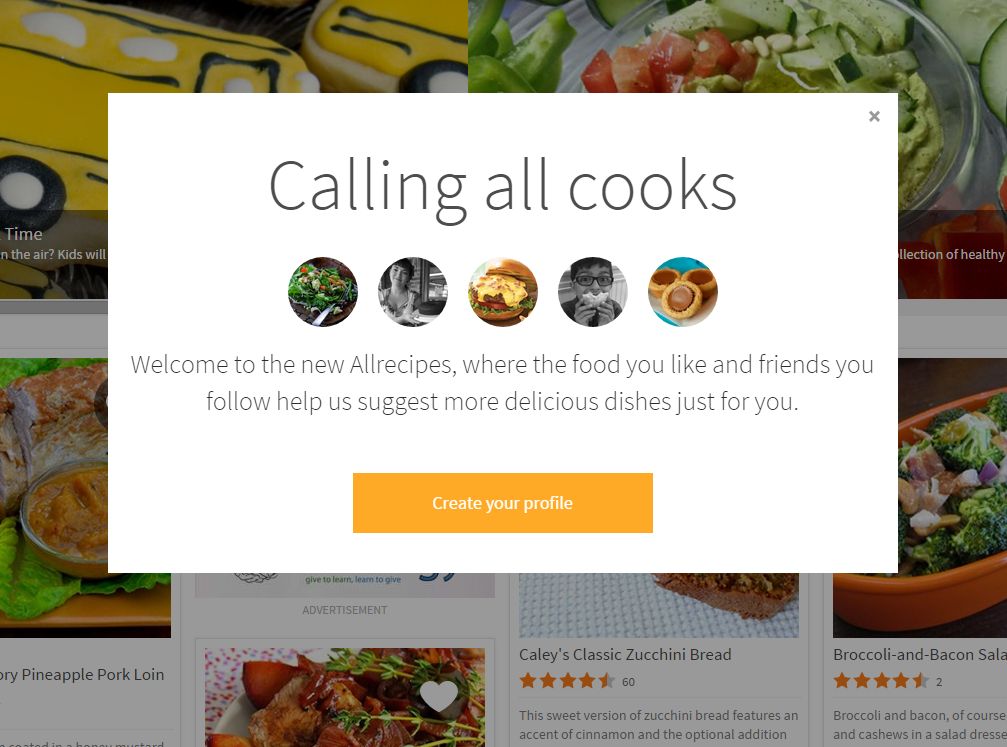
Allrecipes • 2013–2016 Allrecipes Calling All Cooks Onboarding Overlay and Registration Redesign

Conversion UX + Redesign: Allrecipes (+25% Sign-Up Lift), Overlays, & Dinner Spinner

Role Senior UI/UX Writer at Allrecipes (Seattle, WA • Sep 2013 – Apr 2016)

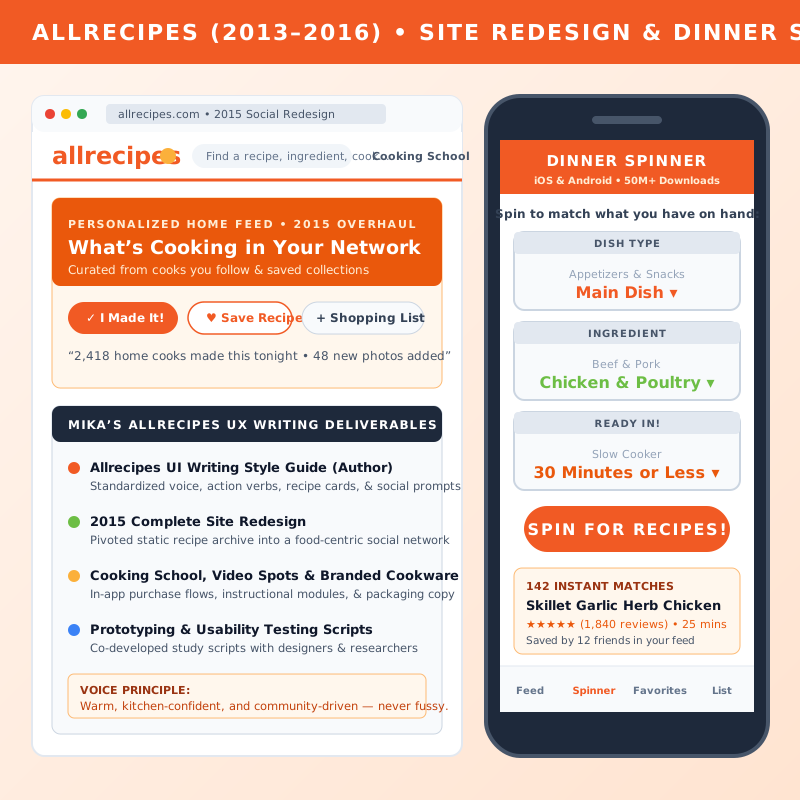
The work 2015 site redesign, registration A/B testing, onboarding overlays, Dinner Spinner mobile apps, UI Style Guide, and email campaigns

Impact Partnered with design to drive a 25% lift in registration starts and a 27.47% open rate / 17.77% CTR across 4.17M email subscribers.

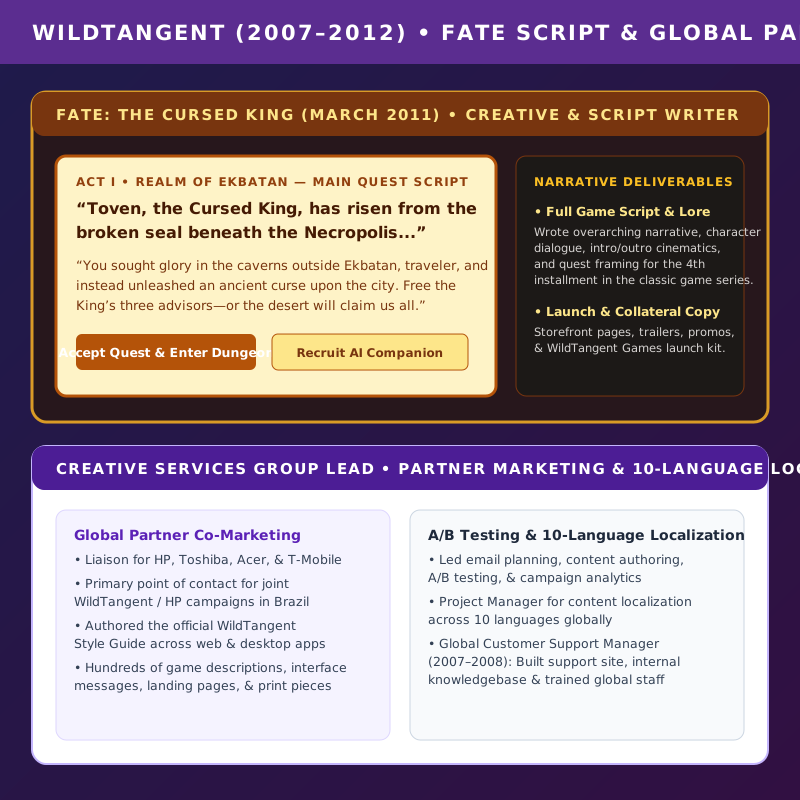
WildTangent • 2007–2012 WildTangent Games and FATE: The Cursed King script and localization

Game Script + Global Localization: FATE: The Cursed King & OEM Partnerships

Role Senior Marketing & Web Writer / Creative Services Group Lead at WildTangent (2007 – 2012)

The work Scriptwriter for FATE: The Cursed King; creative lead for HP, Toshiba, Acer, and T-Mobile partnerships; 10-language localization PM

Impact Created the WildTangent Style Guide, managed localization across 10 languages, and wrote the script for a classic action-RPG.

Because Words Matter.

For more than 14 years, I’ve designed and created content experiences—from UX flows, to marketing, to video game dialogue. I understand what, when, and how to say it.
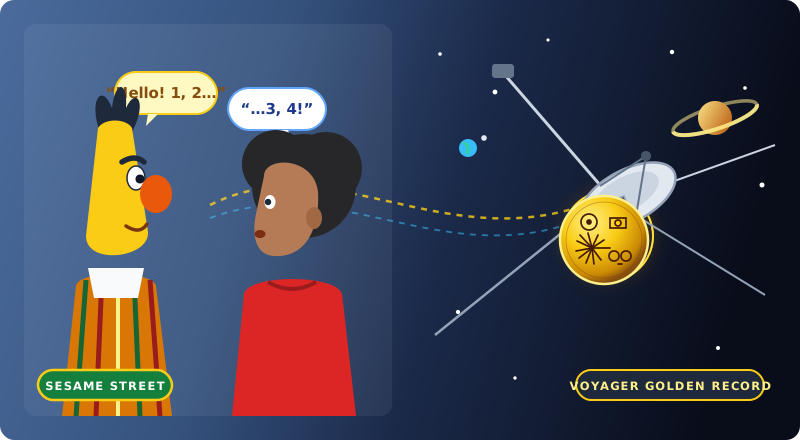
Stylized 3-second looping animation blending Sesame Street conversation with Voyager 1 and the Golden Record flying through the solar system
From Sesame Street to Voyager’s Golden Record, I’m inspired by how we communicate.

Featured Projects

Flagship product redesigns, enterprise content systems, and conversion-tested UX writing

About Me

Hi, I’m Mika—a Senior UX Writer and Content Designer with 14+ years of experience building content systems for large-scale products. I’ve led content strategy for flagship Google Workspace apps used by 1.5 billion people, localized Nintendo 3DS classics, and written style guides for Allrecipes.

Before tech and gaming, I earned my B.S. in Entomology from Texas A&M University, which was actually pretty great training for taxonomy, systems thinking, and filing detailed bug reports.

Following my tenure at Google (2016–2022), I took a planned sabbatical to support my aging parents in Texas, travel solo, and enjoy creative pursuits. Curious about how strangely happy the crew is, I also took a job at Trader Joe’s in 2025 and was subsequently promoted.

Now, with my family settled and some personal goals accomplished, I’m returning to the world of tech. I’m particularly interested in emerging AI-assisted design workflows.
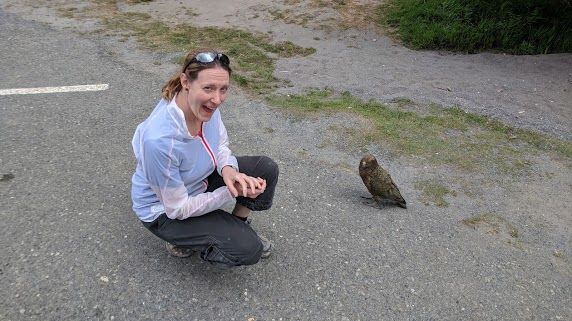
Mika Ritter crouching next to a wild Kea parrot in New Zealand
Field Research in New Zealand “I’d wanted to see a Kea for years. This Kea did not disappoint.”

My Rudemates

Meet Benjamin and Hobbes—co-coworkers, nap specialists, and tireless supervisors of every style guide draft.
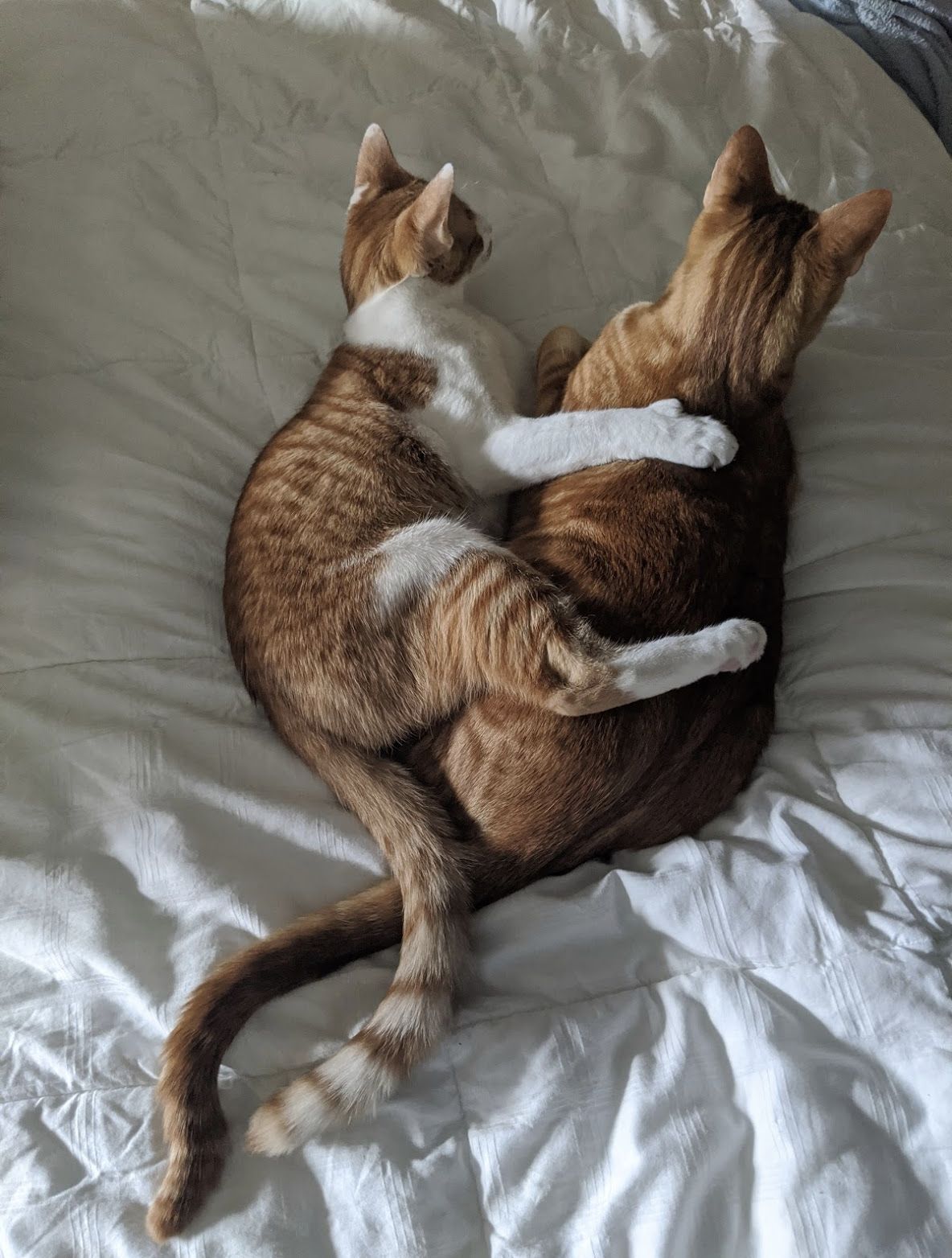
Benjamin and Hobbes cuddling
Benjamin & Hobbes “Benjamin and Hobbes spreading viruses, probably”

Resume — Mika Ritter

⬇ Download Resume PDF ⬇ Portfolio Deck PDF ⬇ Chat History & Samples PDF

Summary

Senior UX Writer with 14+ years’ experience building content systems for large-scale products, including work in AI-assisted design workflows, usability testing, and cross-functional delivery.

Sabbatical / Elder Care

2022 – 2025

  • Took a planned sabbatical following my Google tenure to support aging family, travel, and pursue creative interests.
  • Stayed current with UX writing practices through peer collaboration and exploration of emerging AI-assisted design tools.
  • Also took a crew position at Trader Joe’s in 2025 and was subsequently promoted.

Google | UX Writer — Gmail and Chat

Sunnyvale, CA | Jul 2019 – Sep 2022

  • UXW for flagship products used by 1.5 billion people during a major redesign across 7 product pillars, working alongside 17+ designers and 10 researchers.
  • Contributed content strategy for the “next generation of Gmail” from inception to launch.
  • Wrote and revised Gmail security, phishing, and external-sender warning banners in collaboration with Security Engineering, Privacy, and Legal.
  • Designed UX copy for Gmail Customizable Templates (Layouts), Multi-send mode, and Smart Canvas Mail Merge (@firstname personalization).
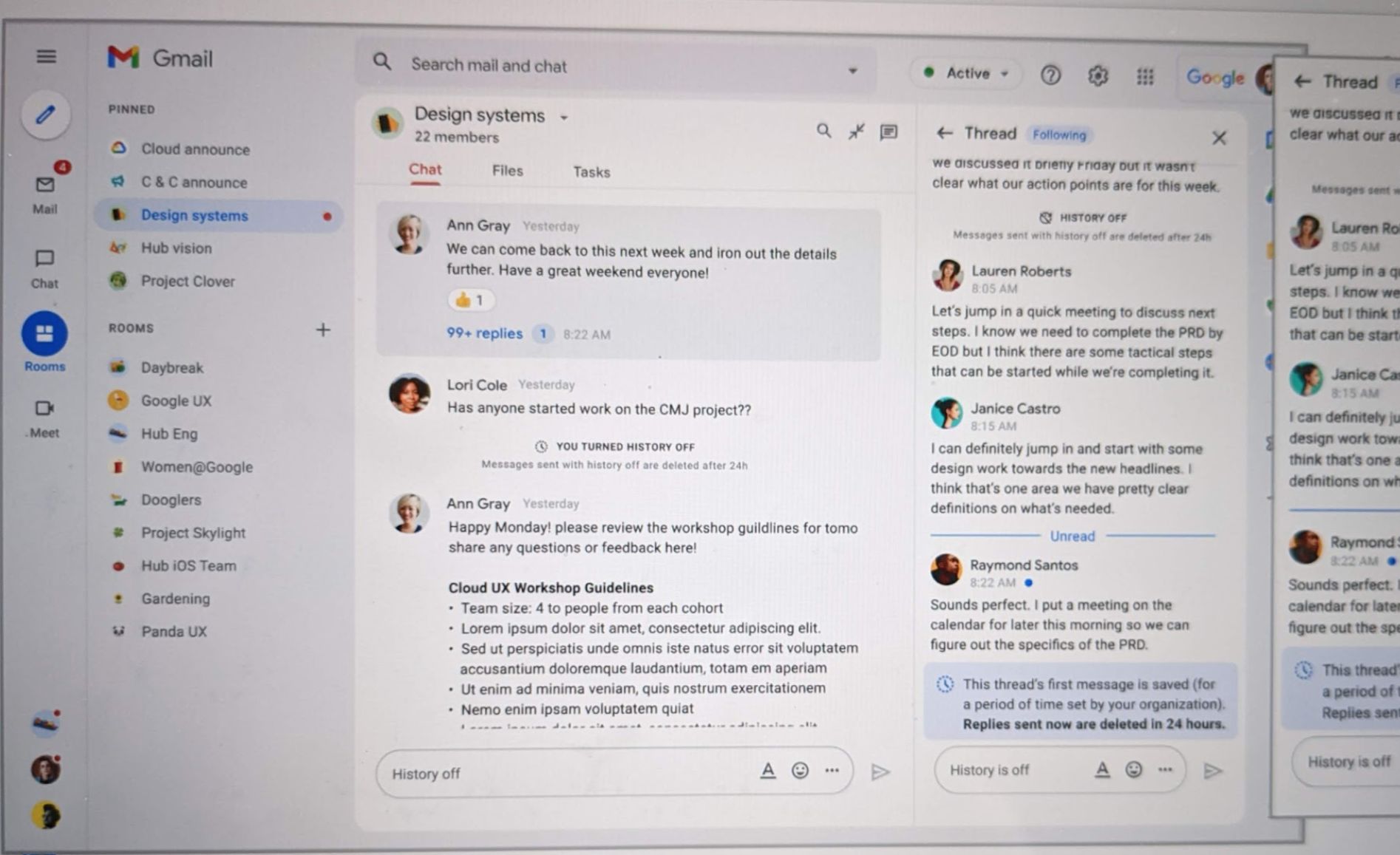
  • Helped structure the Classic Hangouts to Google Chat migration flow, audited Chat strings across platforms, and clarified 4-state Threading + History retention messaging.
  • Crafted explorations of naming and verb-oriented navigation labels to help build team consensus and shared guidelines.
  • Partnered with UXR on usability testing, surveys, and voice and tone explorations; collaborated with marketing on video scripts for Cloud Next 2020.

Google | UX Writer — Currents and Google+

Sunnyvale, CA | Aug 2016 – Jul 2019

  • UXW for Spaces (2016 app), Google+, and Currents.
  • Wrote style guides, notifications, onboarding, tooltips, search result framing, and end-of-stream and empty state messages.
  • Partnered with UXR and Marketing on product vision, value proposition, and messaging (Currents).
  • Led content strategy for shutdown banners, announcements, and related user touchpoints (Google+ and Spaces).
  • Coordinated shutdown communications across 3rd-party developer, consumer, enterprise, and internal workstreams (Google+).
  • Led content testing on tag-related language and stream naming.

Allrecipes | Senior UX/UI Writer

Seattle, WA | Sep 2013 – Apr 2016

  • UXW for Allrecipes’ redesigned site and Dinner Spinner iOS and Android apps (including registration flow improvements yielding a 25% lift in sign-up starts).
  • Additional writing for email (e.g., 4.17M-recipient Breakfast Campaign with 27.47% open rate & 17.77% CTR), social campaigns, branded cookware, Cooking School, video spots, and in-app purchases.
  • Produced a comprehensive Allrecipes UI writing style guide.
  • Partnered with UX Designers and Researchers on prototyping and usability study scripts.

Nintendo of America | Associate Localization Writer

Redmond, WA | May 2012 – Apr 2013

  • Creative writer for the EN-US release of Animal Crossing: New Leaf and Style Savvy: Trendsetters.
  • Localized game dialog and scenarios for several character archetypes and key personas, re-characterizing animal personality types to better align with U.S. cultural norms and mitigate stereotypes.
  • Performed post-localization gameplay and informal QA in collaboration with global writers, translators, and developers.

WildTangent | Senior Marketing and Web Writer

Redmond, WA | May 2008 – May 2012

  • Promoted to team lead for creative services.
  • Served as the liaison for creative partnerships with HP, Toshiba, Acer, and T-Mobile, including joint WT/HP campaigns in Brazil.
  • Planned, wrote, and A/B tested email campaigns with high-level performance analysis.
  • Managed content localization process across 10 languages.
  • Wrote email newsletters, promos, landing pages, triggered UI messages, paid search ads, game descriptions, print pieces, and the WT style guide.
  • Wrote the script for FATE: The Cursed King and collateral material.

WildTangent | Global Customer Support Manager

Redmond, WA | Jul 2007 – Mar 2008

  • Primary writer for customer support site and internal knowledgebase.
  • Project manager for WildTangent customer support localization and global staff training.
← Back to Portfolio

The Next Generation of Gmail: Redesign, Onboarding, & Navigation

Collaborating across 7 product pillars to unify Gmail, Chat, Spaces, Search/Assistant, 3rd-party apps, Meet, and Currents for 1.5 billion users.

Company & TimelineGoogle (Jul 2019 – Sep 2022)
Cross-Functional Scope7 Pillars • 17+ Designers & 10 Researchers
Horizontal PartnersVisual Design, UX Research, UX Engineering, Product Management, Privacy, & Legal
Reach1.5 Billion Active Users

1. The Challenge: Unifying Workspace Conversations

Our cross-functional team designed the next generation of Gmail—a major Google Workspace evolution bringing together Gmail, Chat (direct messages and collaborative spaces with embedded tasks and Docs), Search and Assistant, 3rd-party integrated apps, Meet (with a fellow UX writer), and Currents.

As the UX Writer across 7 product pillars, I partnered with 17+ designers and 10 researchers, as well as PM, Engineering, Visual Design, UX Engineering, Marketing, Privacy, and Legal teams.
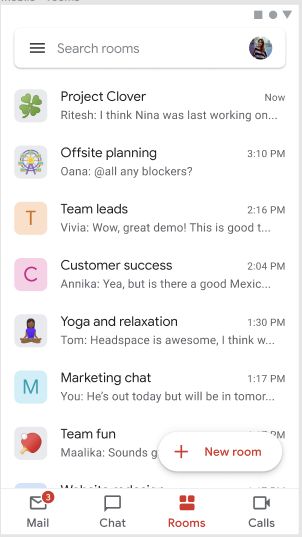
Gmail mobile Rooms tab showing Mail, Chat, Rooms, and Calls navigation
Mobile Unified Navigation Integrating Mail, Chat, Rooms, and Calls into a single mobile bar without overwhelming the inbox.
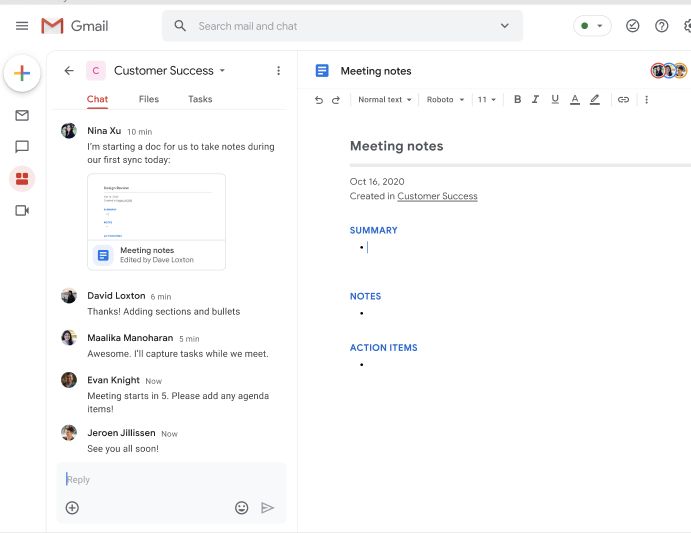
Gmail desktop workspace showing Chat and live Google Docs Meeting notes side-by-side
Desktop Integrated Workspace (Cloud Next ’20) Side-by-side Room chat and live Google Docs (“Meeting notes”) inside Gmail, reducing context switching.

2. Updated Onboarding: Reassurance & Feature Discovery

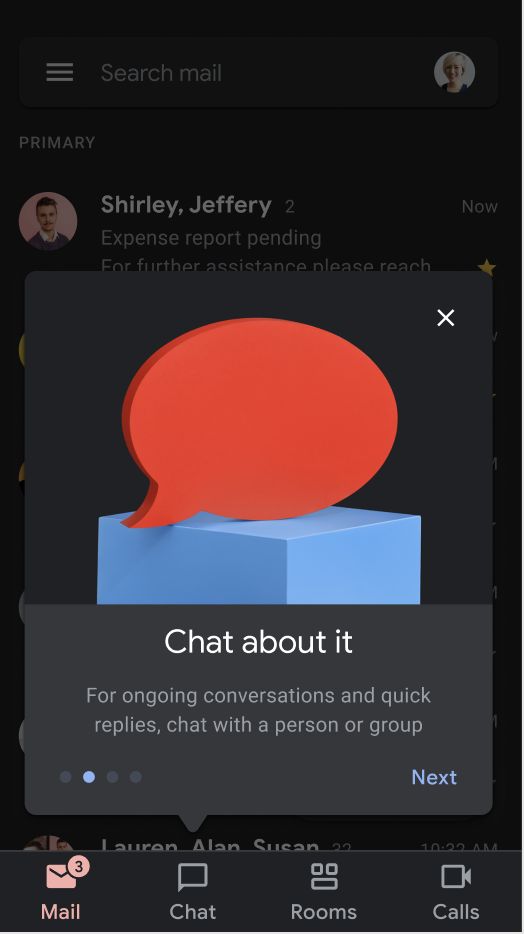
Partnering with UX Design, Research, and Product Marketing, I wrote the splash screen onboarding sequence for the redesigned Gmail. The flow reassured users that their familiar inbox remained intact while introducing faster ways to message, meet, and collaborate—performing well in biweekly usability studies.
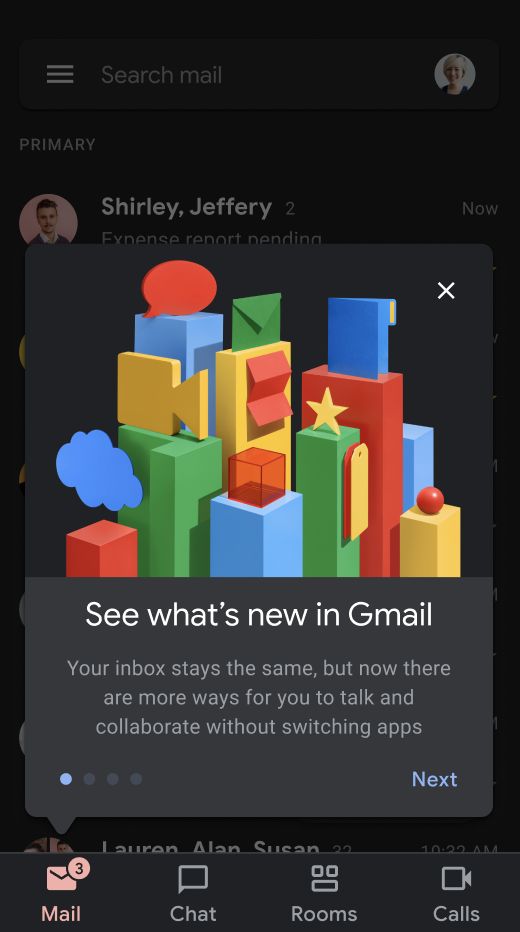
Onboarding Step 1: See what's new in Gmail
Screen 1: Reassure & Frame “See what’s new in Gmail — Your inbox stays the same, but now there are more ways for you to talk and collaborate without switching apps”
Onboarding Step 2: Chat about it
Screen 2: Direct & Group Chat “Chat about it — For ongoing conversations and quick replies, chat with a person or group”
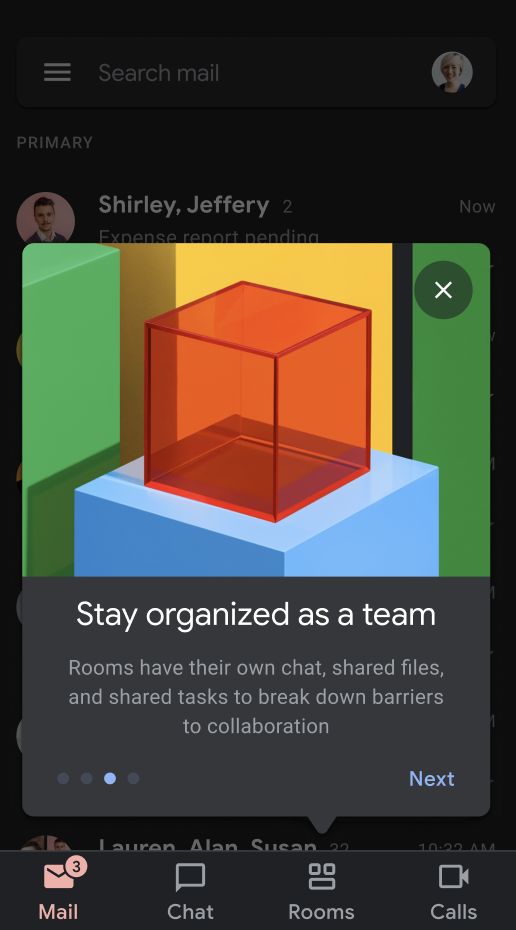
Onboarding Step 3: Stay organized as a team
Screen 3: Collaborative Rooms “Stay organized as a team — Rooms have their own chat, shared files, and shared tasks to break down barriers to collaboration”

3. Navigation & Naming Architecture

Working closely with UX Research and Design, I explored action-oriented navigation labels so Gmail felt less like a static archive and more like an active workspace:
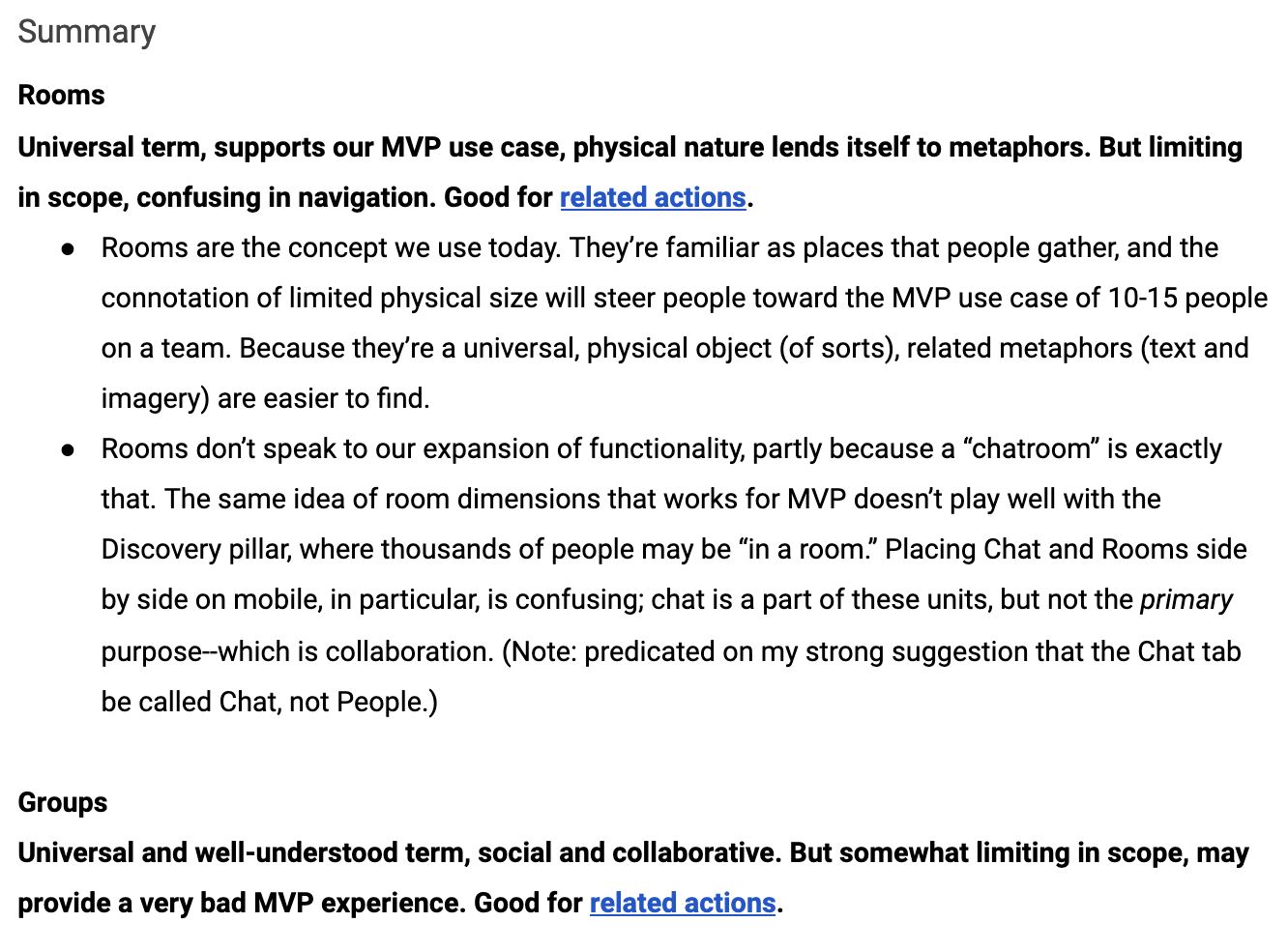
  • Rooms, groups, or spaces (Collaboration tab): Evaluated physical metaphors, initial team sizes (10–15 people), and long-term discovery scale. Recommended keeping the 1:1 messaging tab named Chat (rather than People) to avoid overlap with collaborative spaces.
  • Mail or Inbox: Assessed consistency across mobile and web mental models.
  • Call or Calls (Meet): Partnered on two rounds of naming and usability testing.
“Placing Chat and Rooms side by side on mobile, in particular, is confusing; chat is a part of these units, but not the primary purpose—which is collaboration.”
Navigation and naming analysis document comparing Rooms and Groups
Original Naming Exploration Artifact Evaluating “Rooms” vs. “Groups” for the Collaboration tab (click to zoom).
← Back to Portfolio

Gmail Security, Phishing, & External-Domain Banners

Collaborating with Security Engineering, Privacy, Legal, and UX Design to translate authentication signals into clear, actionable warnings for phishing, sender spoofing, and external recipients.

Company & TimelineGoogle • Gmail (2019 – 2022)
TouchpointsPhishing, Sender Spoofing, & External-Domain Warnings
PartnersSecurity Eng, Privacy, Legal, PM, & UX Design
Core PrincipleClear, Proportional, & Actionable

1. Writing & Refining In-Product Security Warnings

In-product security warnings appear right as someone is reading or replying to an email. When alerts rely on dense technical phrasing (such as SPF/DKIM alignment failure or unauthenticated domain), users often overlook them or struggle to gauge the actual risk.

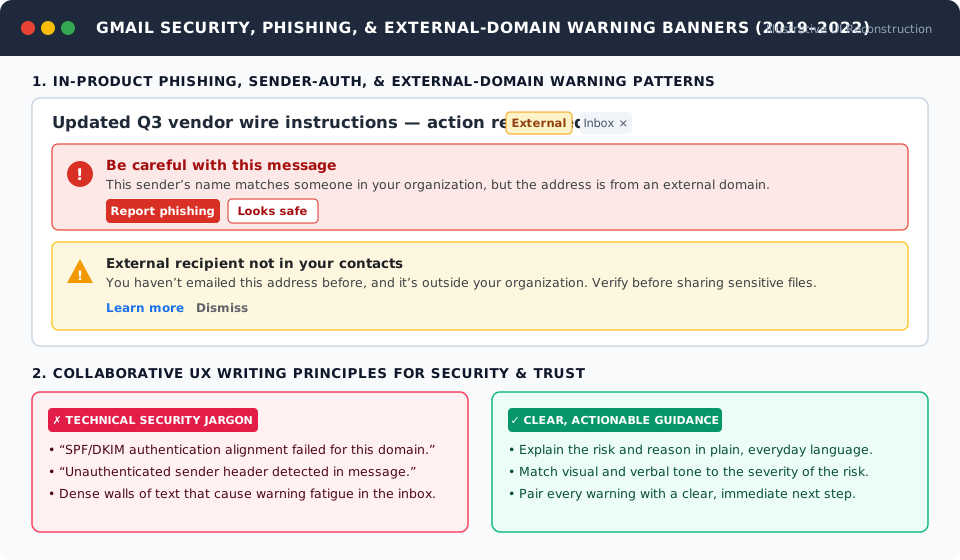
Working alongside Security Engineering, Privacy, Legal, PM, and UX Design, I wrote and refined Gmail’s in-product security banners across suspected phishing, display-name spoofing, and external-domain recipient warnings:

  • Explain the risk in plain language: Rather than citing protocol failures, state the specific anomaly clearly—for example, noting when a sender’s display name matches someone in the user’s organization, but the email address is from an outside domain.
  • Calibrate tone to risk severity: High-risk phishing banners use direct, urgent guidance, whereas yellow external-recipient banners provide a calm, timely reminder before someone replies with confidential information.
  • Pair warnings with clear actions: Combined each alert with straightforward next steps (such as Report phishing, Looks safe, and Dismiss) to help users act confidently and reduce alert fatigue.
Illustrative UI reconstruction of Gmail phishing, sender-spoofing, and external-domain warning banners
Gmail Security Banner Hierarchy (Illustrative Reconstruction) An illustrative UI reconstruction showing the phishing, sender-spoofing, and external-domain warning patterns our team collaborated on (click to enlarge).
← Back to Portfolio

Gmail Customizable Templates (Layouts), Multi-Send, & Mail Merge

Collaborating on newsletter templates, multi-send workflows, and Smart Canvas @firstname personalization directly inside the Gmail compose window.

Company & TimelineGoogle • Gmail (2021 – Feb 2022)
Internal SpecsMail Merge & Customizable Layouts Specs
Key FeaturesCustomizable Layouts, Multi-Send, & @-Mention Merge Tags
ArchitectureFirst Iteration of Smart Canvas in Gmail

1. Bringing Native Outreach & Personalization to Gmail

Small business owners, educators, and internal communications teams often needed a way to send branded announcements or personalized updates directly from Gmail without relying on external marketing tools or large Bcc lists.

From 2021 to 2022, I partnered with PM, UX Design, and Engineering on the UX writing for three interconnected features:

  • Customizable Email Templates (Customizable Layouts): Built-in templates where senders could customize logos, brand colors, images, and footer links.
  • Multi-Send Mode: A dedicated compose mode that sends each recipient an individual copy with an automatic Unsubscribe footer link.
  • Mail Merge / Email Personalization (the Mail Merge product requirements document): The first iteration of Smart Canvas chips in Gmail, supporting @firstname, @lastname, @fullname, and @email tags, as well as linked Google Sheets.

2. Designing for Missing Data & Pre-Send Confidence

Personalization tags work smoothly until a contact record or linked spreadsheet row is missing a first name, which can result in an unintended “Hi ,” greeting.

Working with the design and engineering team, I focused our microcopy on preventing errors before sending:

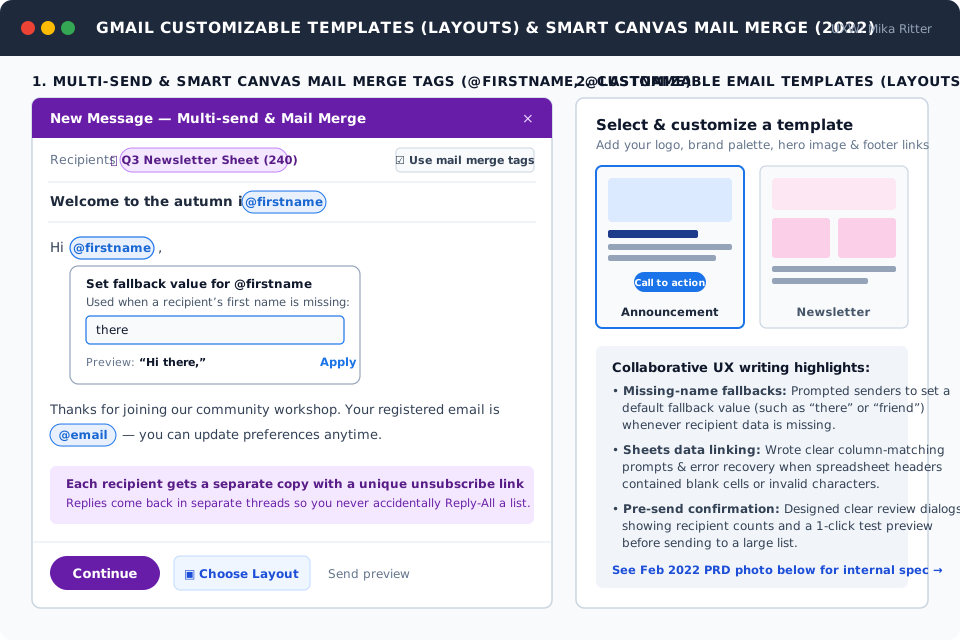
  • Default fallback values: Wrote the inline popover prompting senders to set a fallback word (such as “there” or “friend”) when merge data is blank, complete with a live preview.
  • Spreadsheet linking & error recovery: Authored clear guidance for connecting a Google Sheet, mapping columns to recipients, and resolving empty rows or invalid characters.
  • Pre-send confirmation: Crafted preview and confirmation dialogs so senders knew how many individual emails would be sent and could send a test message first.
Gmail Multi-Send, @firstname Mail Merge chips, and Customizable Layouts UI
Multi-Send, @firstname Merge Chips, & Customizable Layouts Click image to inspect the fallback popover and template selector UI.

3. Original Artifact: February 2022 Mail Merge & Layouts v2 PRD

Below is the header and related-documents map from our February 2022 PRD: Gmail mail merge / email personalization (the Mail Merge product requirements document), connecting Mail Merge / Email Personalization, Layouts v2 (Customizable Layouts specification), Server-Side Placeholder Replacement, Multi-Send, and Smart Canvas.
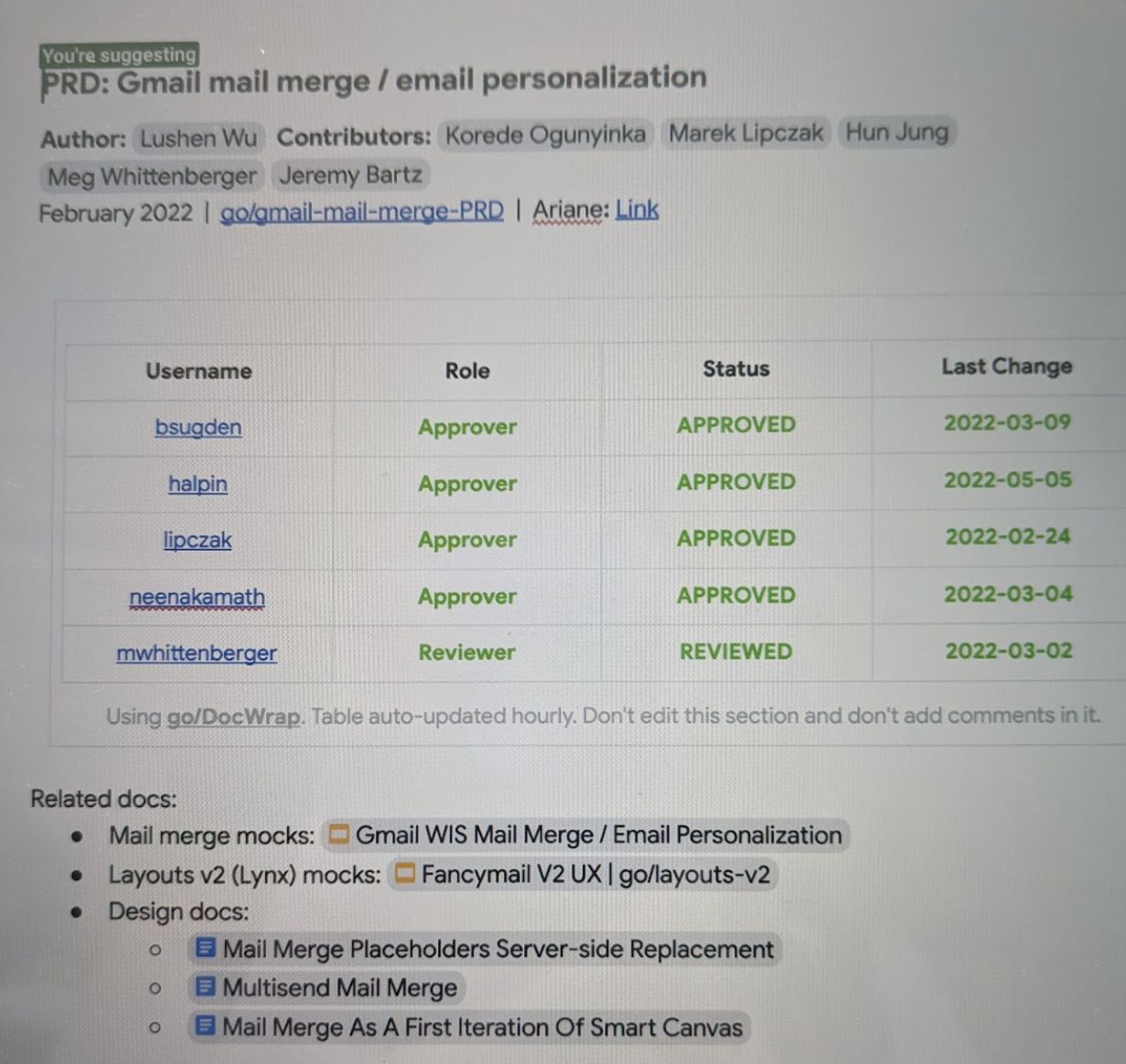
PRD: Gmail mail merge / email personalization (Feb 2022)
Original Artifact: Feb 2022 Mail Merge & Layouts v2 PRD Click image to zoom.
← Back to Portfolio

Google Chat: Threading + History Addendums (10-Slide Deck)

Translating complex 4-state thread and reply retention rules into clear, concise microcopy with Product Management, Product Design, Legal, and Engineering.

Company & TimelineGoogle (Feb 2022)
Featured Deck(Enterprise) Chat History Addendums (Feb 2022)
Sign-Off PartnersProduct Management, Product Design, Legal, & Engineering

1. Clarifying Thread Retention Across Four Intersecting States

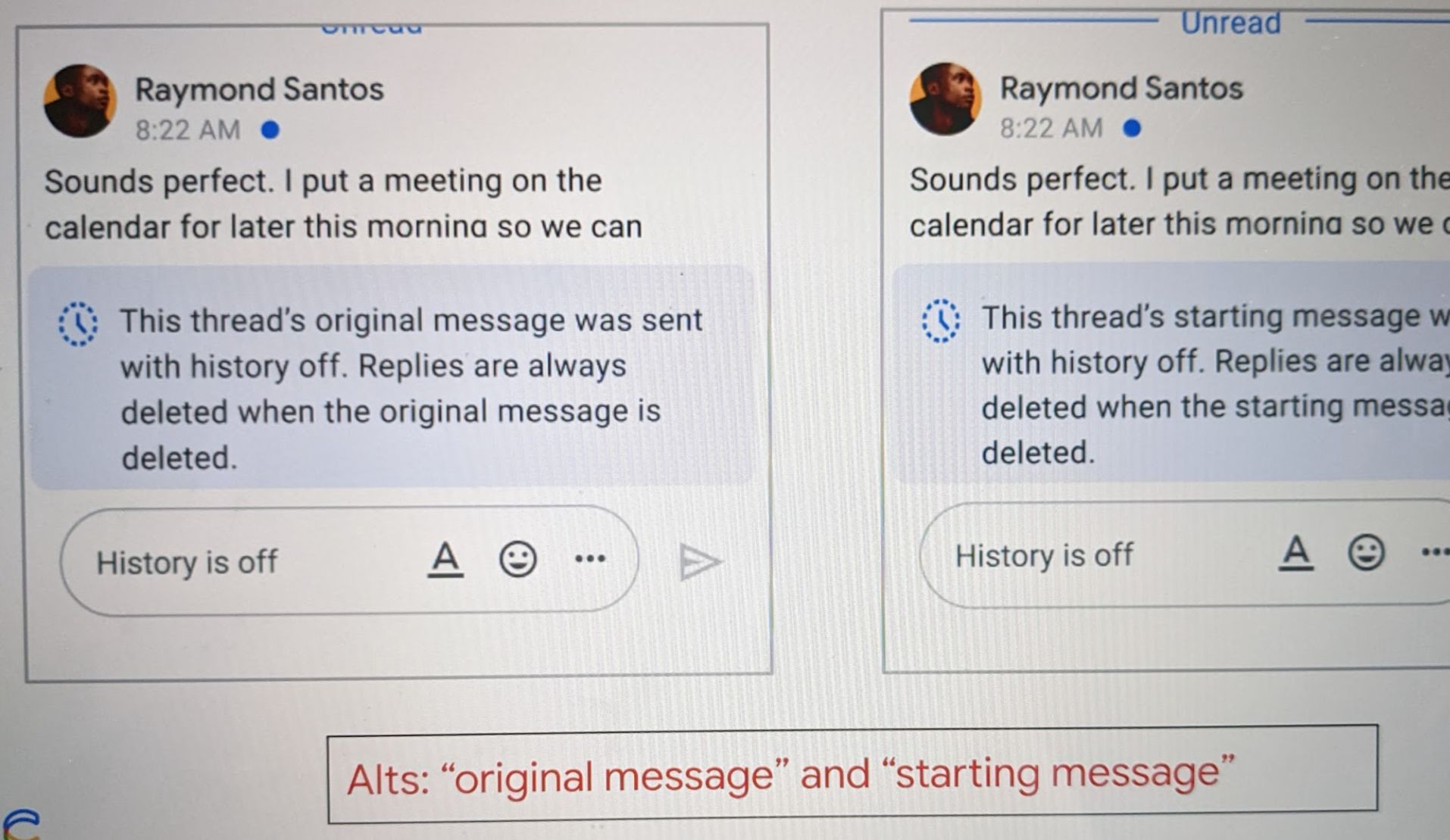
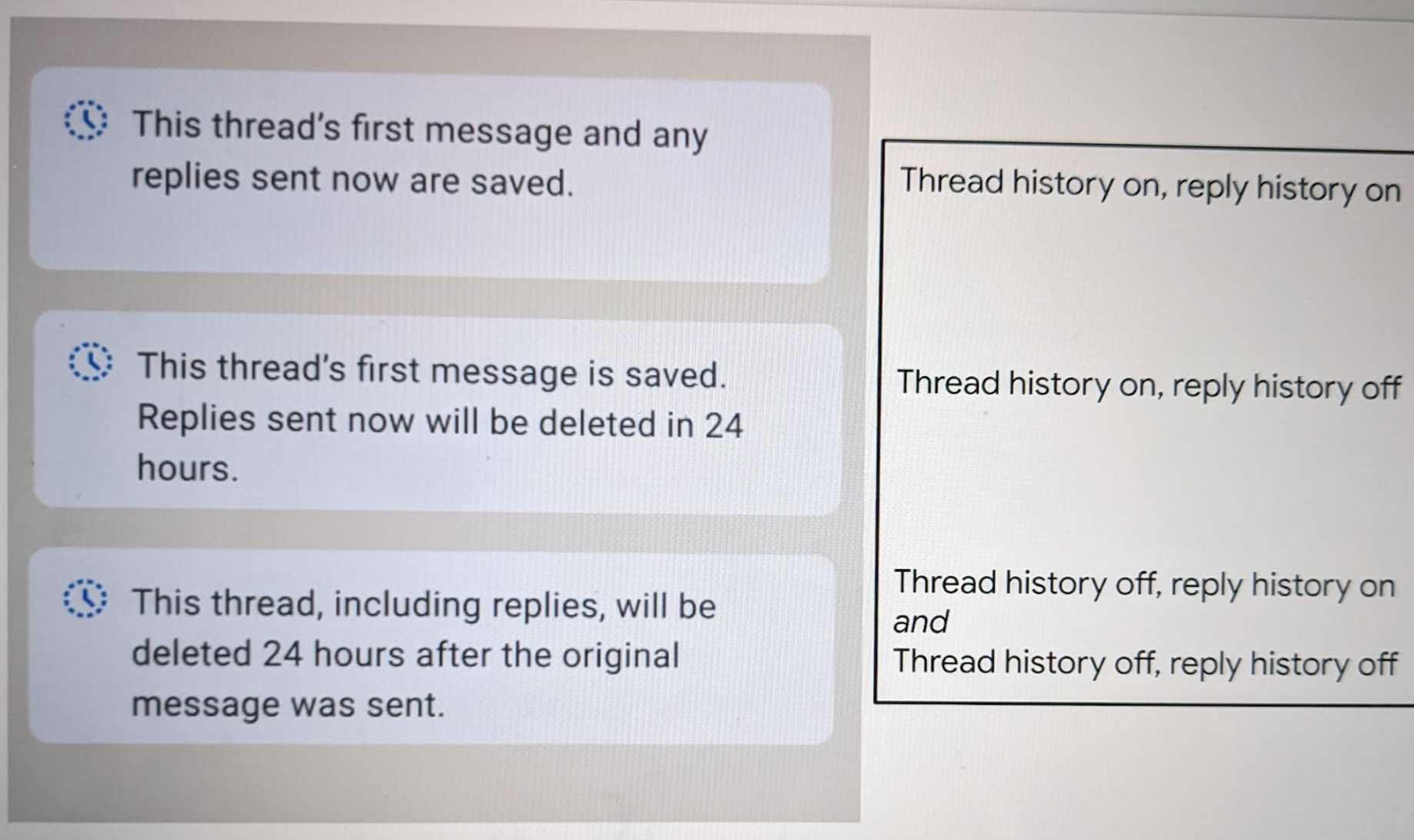
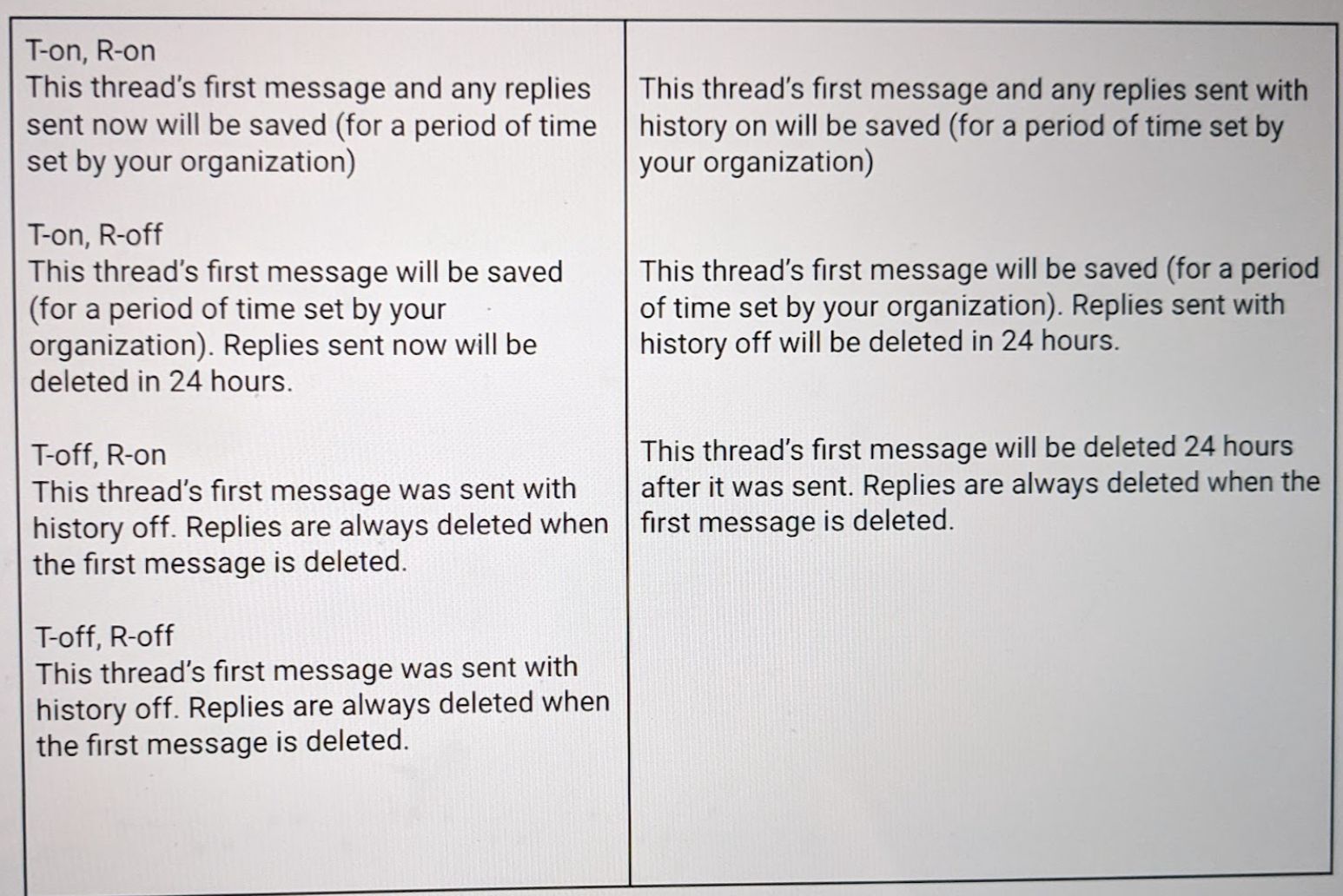
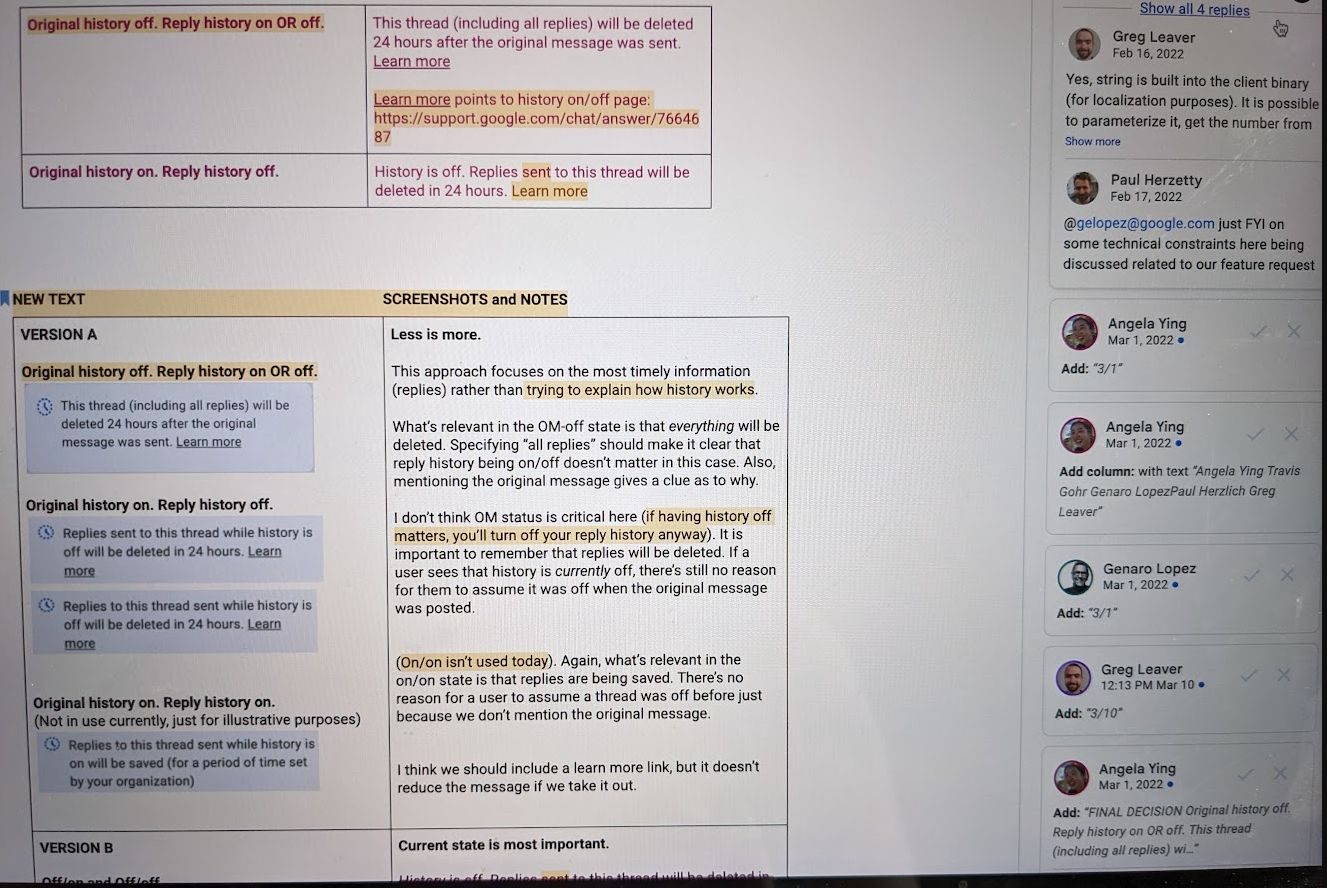
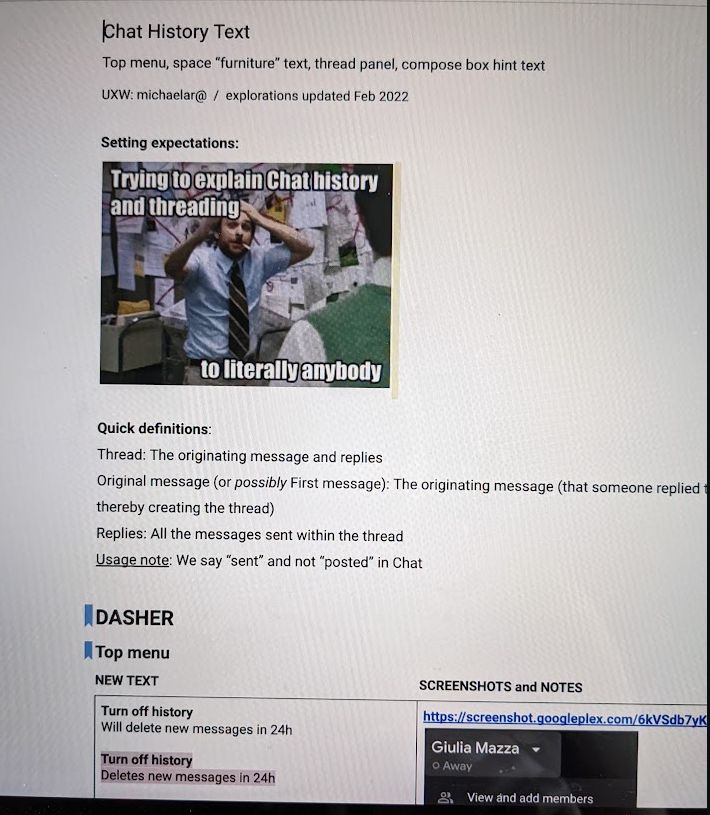
When Google Chat introduced inline Threading in spaces where History could be toggled On or Off mid-conversation (or governed by enterprise domain retention policies), users encountered four intersecting states:

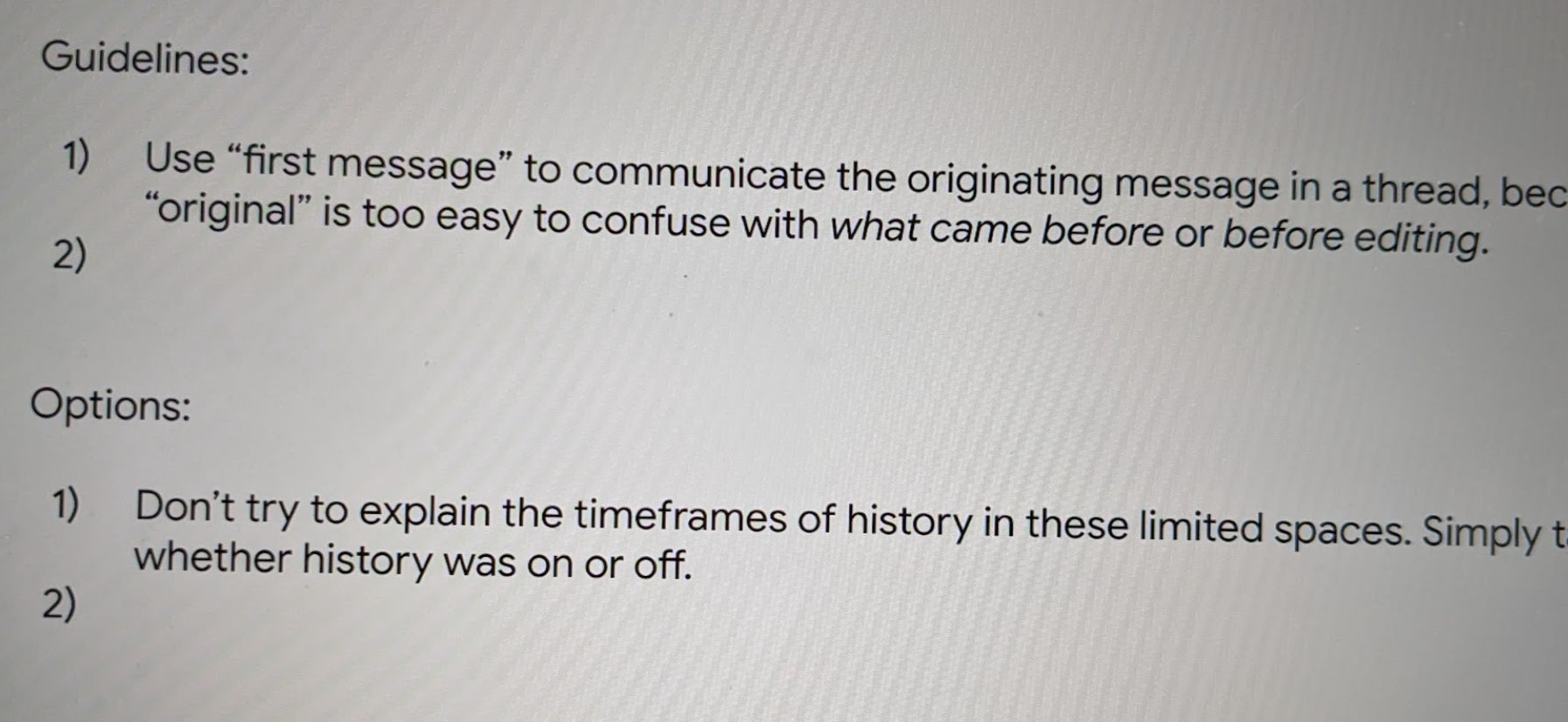
  1. Original message: History Off + Current State: History Off
  2. Original message: History Off + Current State: History On (the entire thread is still deleted 24 hours after the first message)
  3. Original message: History On + Current State: History Off (the first message is saved per organizational policy, while new replies are deleted in 24 hours)
  4. Original message: History On + Current State: History On

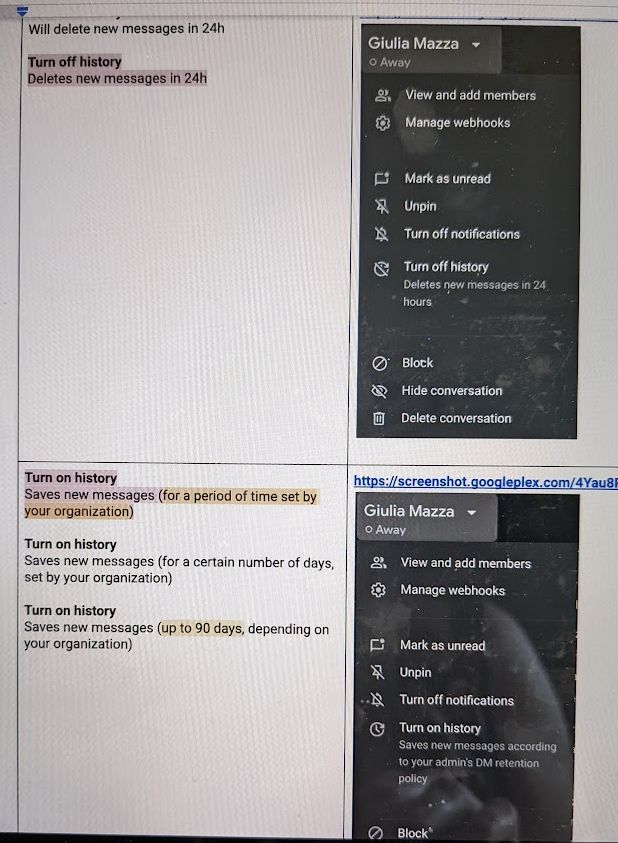
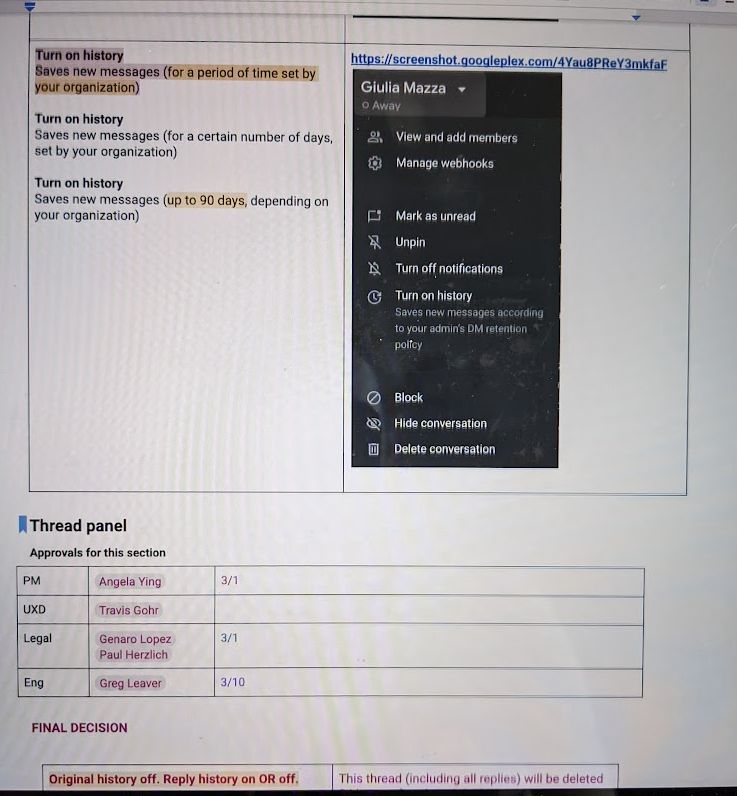
In February 2022, I authored the (Enterprise) Chat history addendums deck and specification—iterating on UI mocks, menu toggles, and edge cases with Product Management, Product Design, Legal, and Engineering to reach cross-functional sign-off.
← Back to Portfolio

Classic Hangouts → Google Chat: Migration Flow & Full String Audit

Structuring the multi-phase migration flow for millions of Hangouts users, auditing legacy strings across platforms, and supporting Presence and Marketplace UX writing.

Company & TimelineGoogle • Chat (2018 – 2022)
Key InitiativesHangouts Migration, Full String Audit, Presence, & Third-Party Integrations
SurfacesGmail Web, Chat Standalone PWA, Android, iOS, & Admin Console
ToolsCMS, Issue Tracker, Figma, & Help Center

1. Structuring the Classic Hangouts → Google Chat Migration Flow

Transitioning millions of daily users from Classic Hangouts to Google Chat required clear expectation-setting so people knew their conversations and contacts were safe.

Partnering with PM, UX Design, and Engineering, I helped structure the multi-phase migration flow across web, mobile, and the Workspace Admin Console:

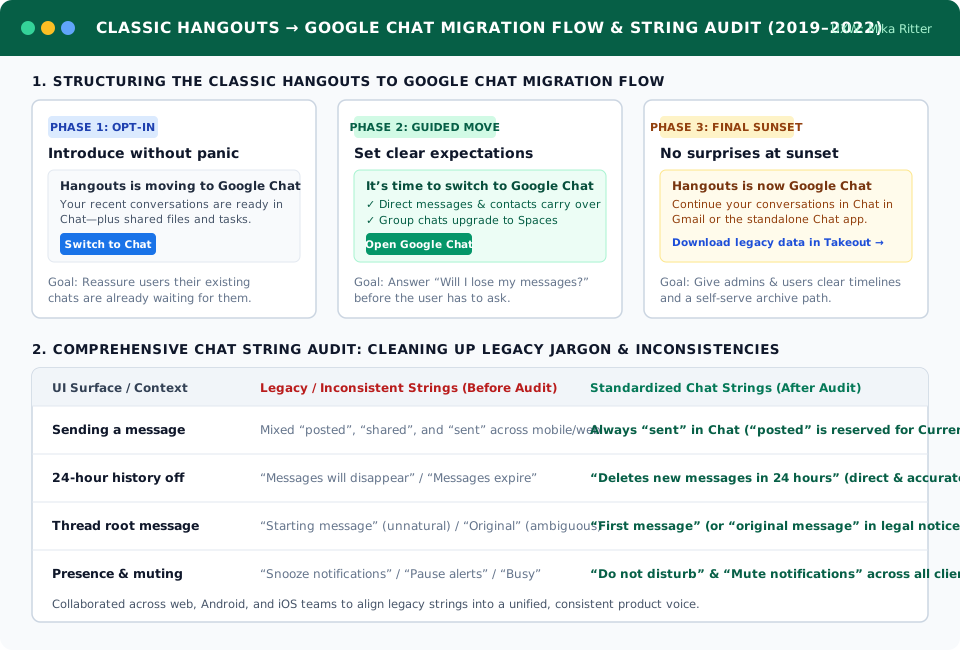
  • Phase 1 — Early Opt-In Banners: Introduced the transition inside Hangouts and Gmail (“Hangouts is moving to Google Chat”) with a clear Switch to Chat action and reassurance that existing conversations were ready in Chat.
  • Phase 2 — Guided Transition & Expectation Setting: Explained what transferred automatically (1:1 messages, contacts, and saved history) and how group conversations evolved into Spaces with shared files and tasks.
  • Phase 3 — Final Sunset & Takeout Self-Service: Provided clear timelines, automatic redirects, and straightforward instructions for exporting legacy data via Google Takeout.

2. Auditing Chat Strings Across Web, Android, & iOS

Because Google Chat evolved from Classic Hangouts, Hangouts Chat, Rooms, and Spaces across multiple teams, the product had accumulated inconsistent terminology across platforms.

I led a comprehensive Chat string audit in our content management and issue-tracking systems to align web, Android, and iOS around consistent terminology:

  • “Sent,” not “posted”: Standardized Chat around sent (reserving posted for longer-form Currents streams).
  • “Deleted,” not “disappear” or “expire”: Used clear, direct language (“Deletes new messages in 24 hours”) when describing message removal.
  • Presence & Muting: Unified varied snooze, pause, and busy labels into consistent Do not disturb, Mute notifications, and custom status copy.
  • 3rd-Party App Submission to the Workspace Marketplace: Collaborated on discovery, permission, and installation flows for Chat integrations.
Classic Hangouts to Google Chat Migration Flow and String Audit table
Hangouts → Chat Migration Flow & String Audit Artifact Click image to inspect the 3-phase migration banners and string standardization table.
← Back to Portfolio

Cross-Functional Side Projects: Duplex, Doodles, & Social Good

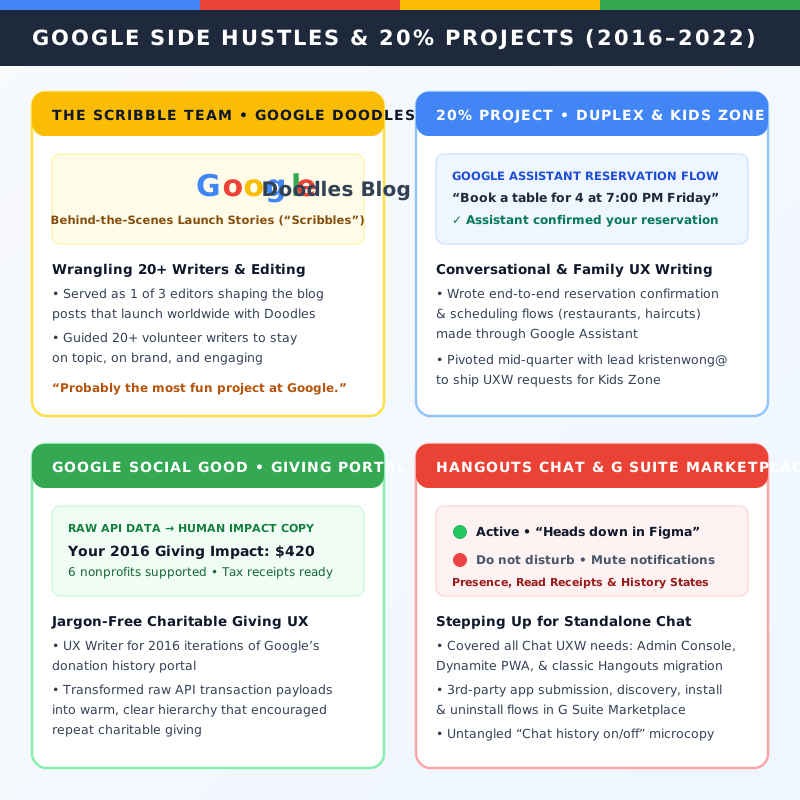
Collaborating on Google Duplex reservation flows (announced at I/O 2019), editing for the Google Doodles blog (“The Scribble Team”), and writing for the Social Good donation portal.

Company & TimelineGoogle (2016 – 2020)
ProjectsDuplex (I/O ’19), Google Doodles, Kids Zone, & Social Good
Editorial ScopeCo-Editing 20+ Volunteer Writers on The Scribble Team
Project Partnerkristenwong@ (Assistant & Kids Zone)

1. Duplex (Announced at Google I/O 2019) & Kids Zone

For Google Duplex—the automated calling service announced at I/O 2019—I partnered with a fellow UX writer to write UX copy for Google Assistant reservation flows, such as booking restaurant tables or hair appointments, and later expanded our support to Kids Zone.

2. The Scribble Team (Google Doodles Blog)

“Scribbles” are behind-the-scenes blog posts published alongside Google Doodles. As one of three editors, I worked with 20+ volunteer writers to keep posts focused, consistent with brand voice, and engaging for readers.

3. Google Social Good (Donation History Portal)

In 2016, I supported iterations of Google’s donation history portal—translating raw API data into clear, accessible summaries that highlighted key giving details first.

Cross-Functional Side Projects Visual Artifact
Cross-Functional Side Projects Artifact Click image to enlarge.
← Back to Portfolio

Systems Thinking: The 22-Page Currents UX/UI Writing Guide

Building a 22-page content design system, “Voice = Climate, Tone = Weather” framework, and screen-reader accessibility standards to help cross-functional teams scale (Internal Content Style Guide).

Company & TimelineGoogle (Aug 2016 – Jul 2019)
RoleUX Writer (Currents & Google+)
Deliverable22-Page Style Guide (Internal Content Style Guide)

Enabling Consistent Content Design Across Evolving Products

The writing guidelines for Google+, Connect, and Currents needed to be comprehensive yet adaptable as product strategy evolved from consumer social networking to enterprise workplace communication.

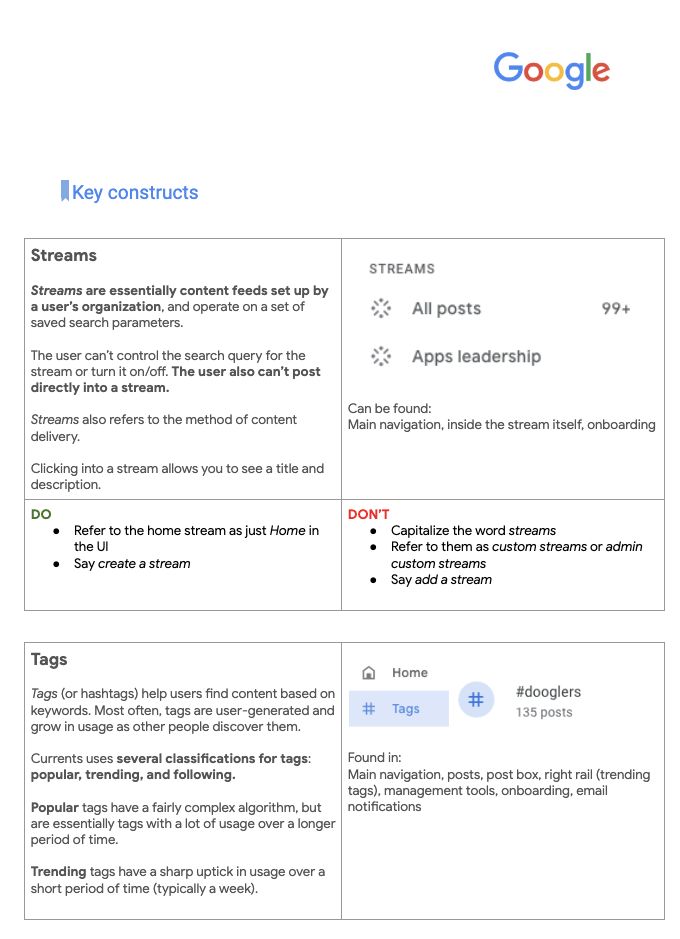
I authored the Currents UX/UI Writing Guide so product managers, engineers, and designers could resolve common pattern questions independently (Remove or Delete? They or He/She? Post or Share?) while knowing when to partner with UX Writing on complex flows or sensitive moderation scenarios.

Currents UX/UI Writing Guide Key Constructs page
Original Artifact: Key Constructs (Streams & Tags) Click image to zoom. Full 22-page PDF available for download.

Voice & Tone Framework: “Voice = Climate. Tone = Weather.”

Voice is our consistent product personality across writers and surfaces. Tone adapts to the user’s context—whether serious (account security or data deletion) or celebratory (onboarding and milestones).

Layer Pillar 1 Pillar 2 Pillar 3
GOOGLE Useful: Put the most important info first, and don’t burden users with unnecessary details. Honest: Be clear and direct with sensitive news or complex concepts. Human: Use plain, natural language, contractions, and concise phrasing.
G SUITE Authentic: Avoid jargon and technical terms so every interaction feels approachable. Empowering: Build tools that help people do their best work and stay in control. Enthusiastic: Bring warmth, clarity, and energy to enterprise software.
CURRENTS Connective: Connects people and knowledge across an entire organization. Thoughtful: Supports longer-form posts and meaningful workplace discussions. Harmonious: Encourages inclusive participation across roles, teams, and levels.

Key Actions & Preposition Architecture

To prevent terminology overlap with Google Docs and Drive (where “Share” refers to file permissions), the guide defined clear usage rules for core actions in Currents:

Term (Use / Not) When to Use Usage & Preposition Rules
Use Post, posting, posted
Use Comment, commented

Not Share, sharing (reserved for Docs/Drive collaboration)
Original text and images authored by a user. • Posted in [community name] (within a community)
• Posted to Currents (the product as a whole)
Use Create, created
Not Share a poll, add a poll
Polls, communities, and collections (use “posted a poll” when referring to publishing). • [Name] created a poll [poll name]
• Always include the content type—a poll.
Use Like, liked / Remove like
Not +1 or Dislike
Referring to the thumbs-up action (which replaced the Google+ +1). • Reversing a like action is remove like, never dislike.
Use stream, streams
Not Admin stream, custom stream, feed
The flow of content cards and saved-search topic streams. • DO Refer to the main stream as Home in the UI; say create a stream.
• DON’T Capitalize streams or say add a stream.
Use Suggested because you follow #cats
Not “Posts you might like” or “Suggested posts”
Inline content recommendations. • Always state the specific recommendation signal clearly: “You follow #cats”.

Screen-Reader Specifications & Accessibility (9M+ Users)

Screen-reader accessibility annotations are specifications that define screen-reader announcements, focus order, and element roles so assistive technologies convey layout hierarchy accurately.

Every new feature in Google+ and Currents included screen-reader accessibility annotations and localization-ready strings (concise, free of idioms, and independent of visual spatial references like “left” or “above”).

Android vs. iOS Platform Conventions

Rule Android (Material) iOS (Apple HIG)
Capitalization Sentence case Title Case
Periods Omit after single sentence or last sentence Always use
Referring to apps Don’t enclose in quotes Enclose in quotes
← Back to Portfolio

Currents: Positioning, Onboarding, Active Tags, & Empty States

Co-creating product positioning with UX Research, achieving 80% participant preference on progressive onboarding, and standardizing tags and empty states.

Company & TimelineGoogle (2018 – 2019)
PartnersUX Research & Product Design Leads
MethodsVision Deck, Hallway Testing, & Design-Sprint Naming Workshop
Usability Result80% (4 of 5) Preferred Progressive Onboarding

1. Product Positioning: A Shared Vision for Currents

Before dedicated branding or marketing support joined in January 2019, our product team needed a cohesive positioning framework.

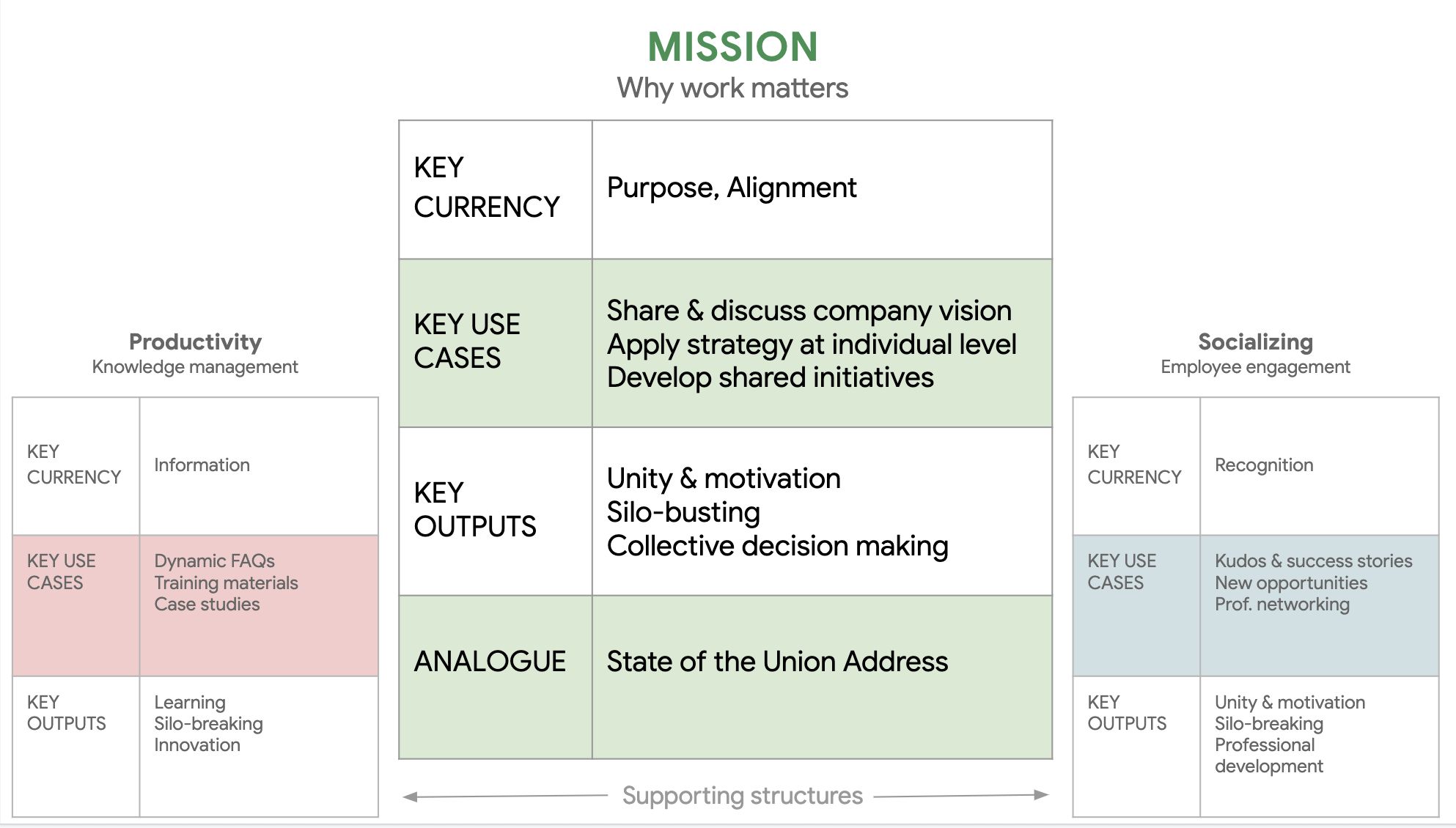
Partnering with our UX Researcher, we created a vision deck mapping the core mission (“Why work matters”) across three pillars—Productivity (Information), Mission (Purpose and Alignment), and Socializing (Recognition). The framework later informed official marketing assets.
Currents Product Positioning Vision Matrix
Original Vision Deck Matrix Co-created with UX Research and later adapted into official marketing assets.

2. Progressive Onboarding: Preferred by 80% of Test Participants

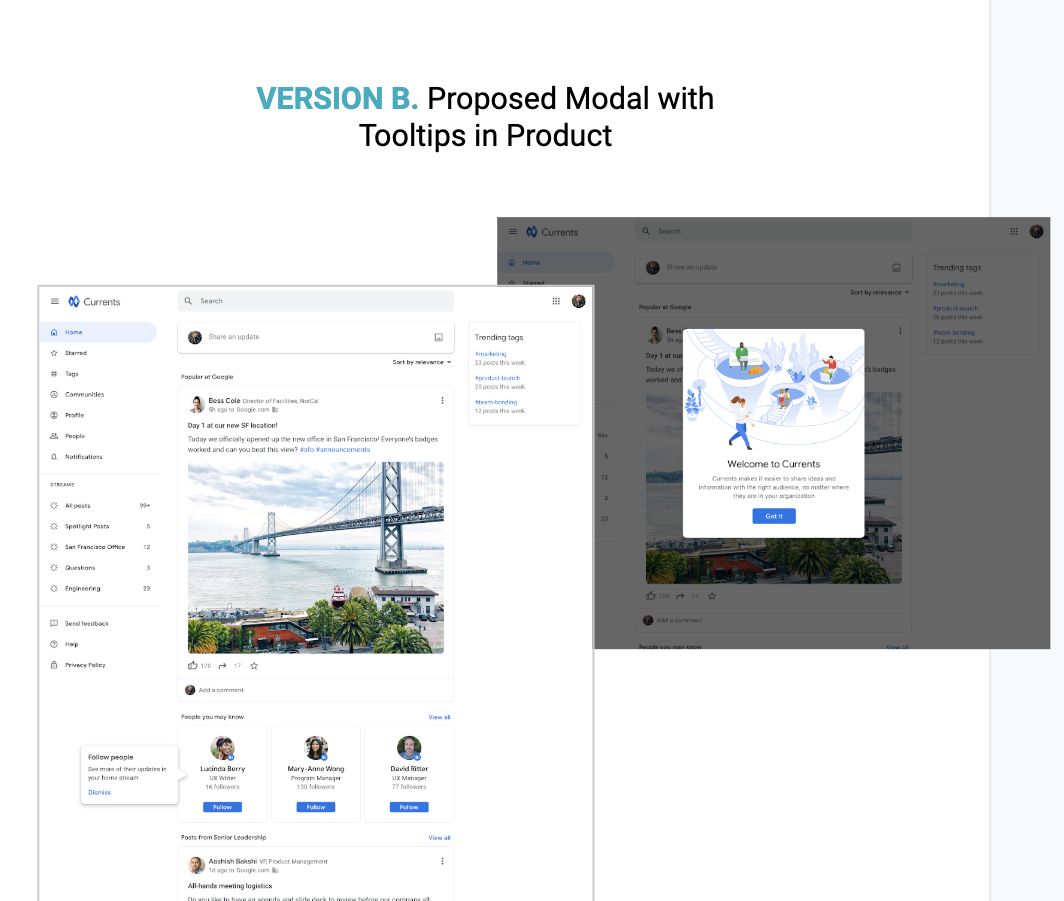
Version B Proposed Modal with Tooltips in Product
Version B: Contextual Modal + Tooltips Preferred by 80% (4 out of 5) of usability test participants over the legacy 3-screen flow.

Currents onboarding originally asked new users to select people and tags to follow across a 3-screen modal before experiencing the product.

our Product Designer and I designed a streamlined onboarding flow combining a revised welcome email, a single-sentence welcome modal, and progressive in-product tooltips. In usability testing, 80% of participants preferred the progressive flow.

3. Active Tags Exploration: Trending vs. Popular Tags (2019)

In 2019, I partnered with Design and Research on content explorations for tag discovery (Active Tags exploration):
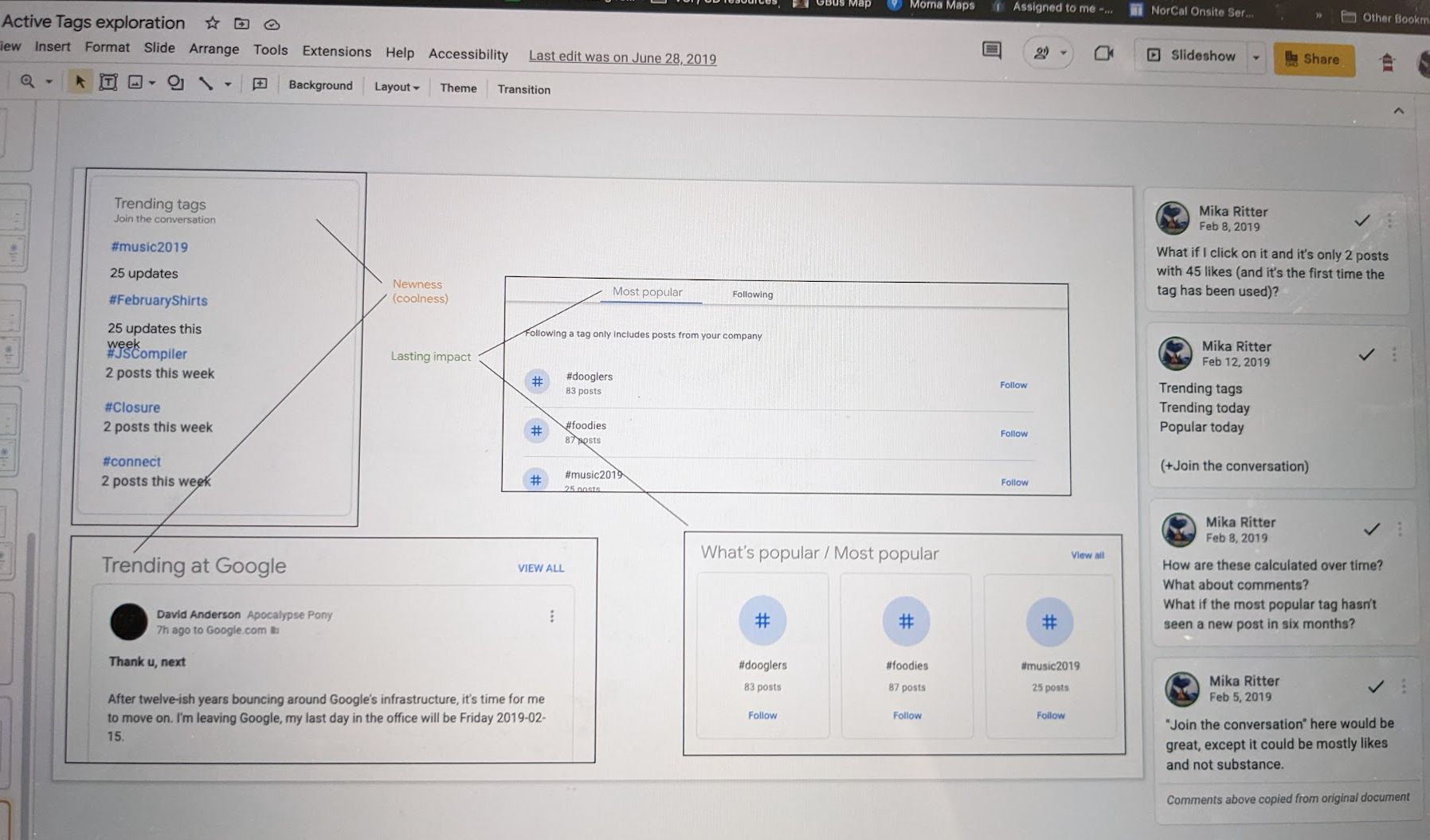
  • Short-Term Momentum vs. Long-Term Volume: Differentiated recent activity (Trending tags, Trending today, and 25 updates this week) from sustained organizational usage (Most popular).
  • Meaningful Activity Signals: Evaluated when to display engagement prompts and how to handle tags that had high historical volume but low recent activity.
Active Tags exploration wireframe and comment thread
Active Tags Exploration (Feb–June 2019) Evaluating short-term momentum vs. long-term impact and tag calculation transparency (click to zoom).

4. Interactive Carousel: End-of-Stream & Empty States (Browsing vs. Seeking)

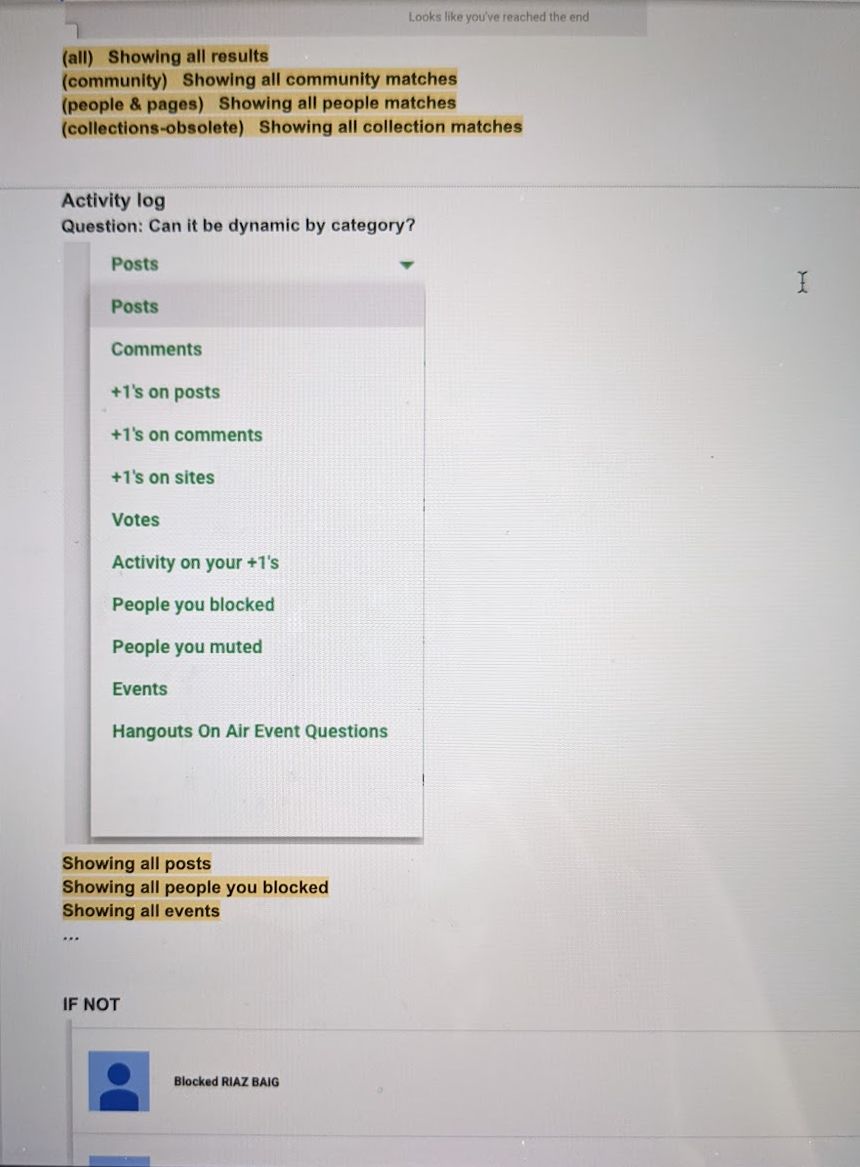
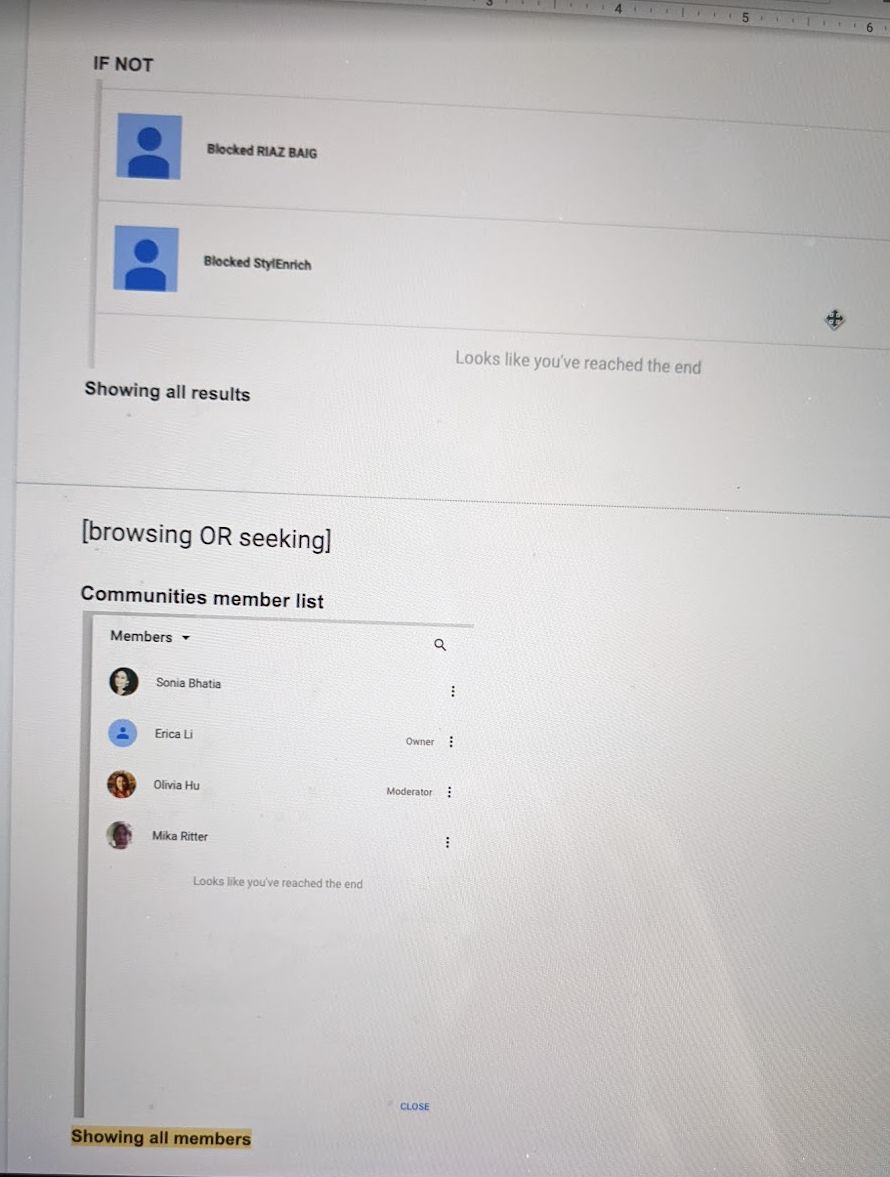
In our End-of-Stream & Empty States specification, I audited feeds, notification panels, search tabs, activity logs, and member lists across Currents to establish a consistent behavioral pattern:
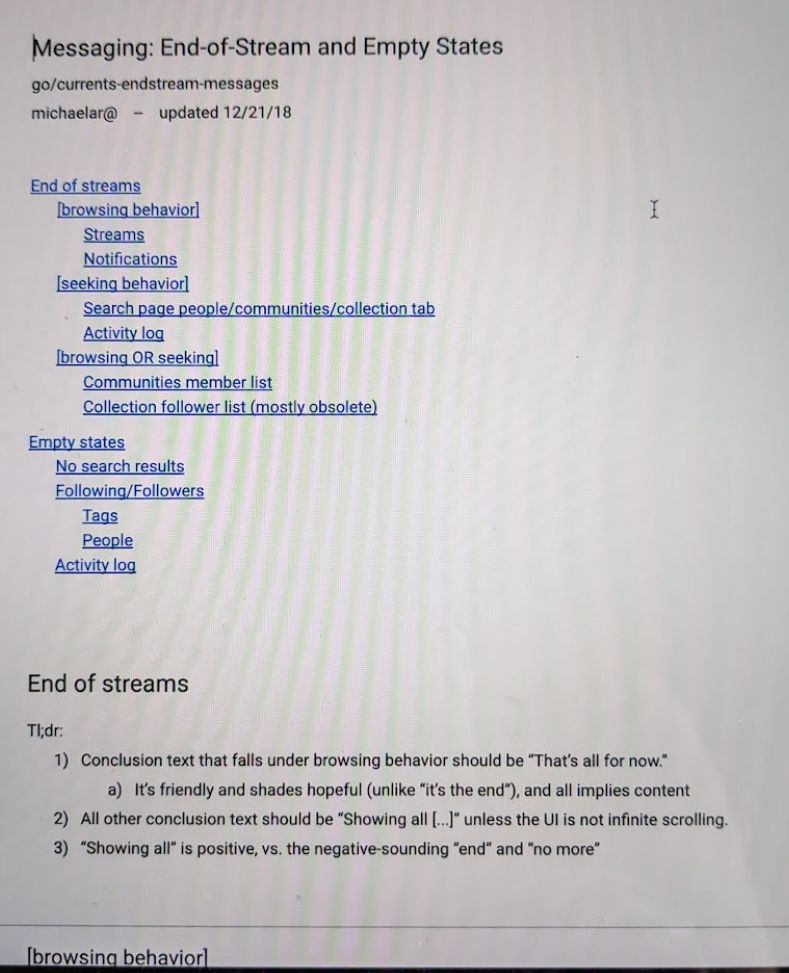
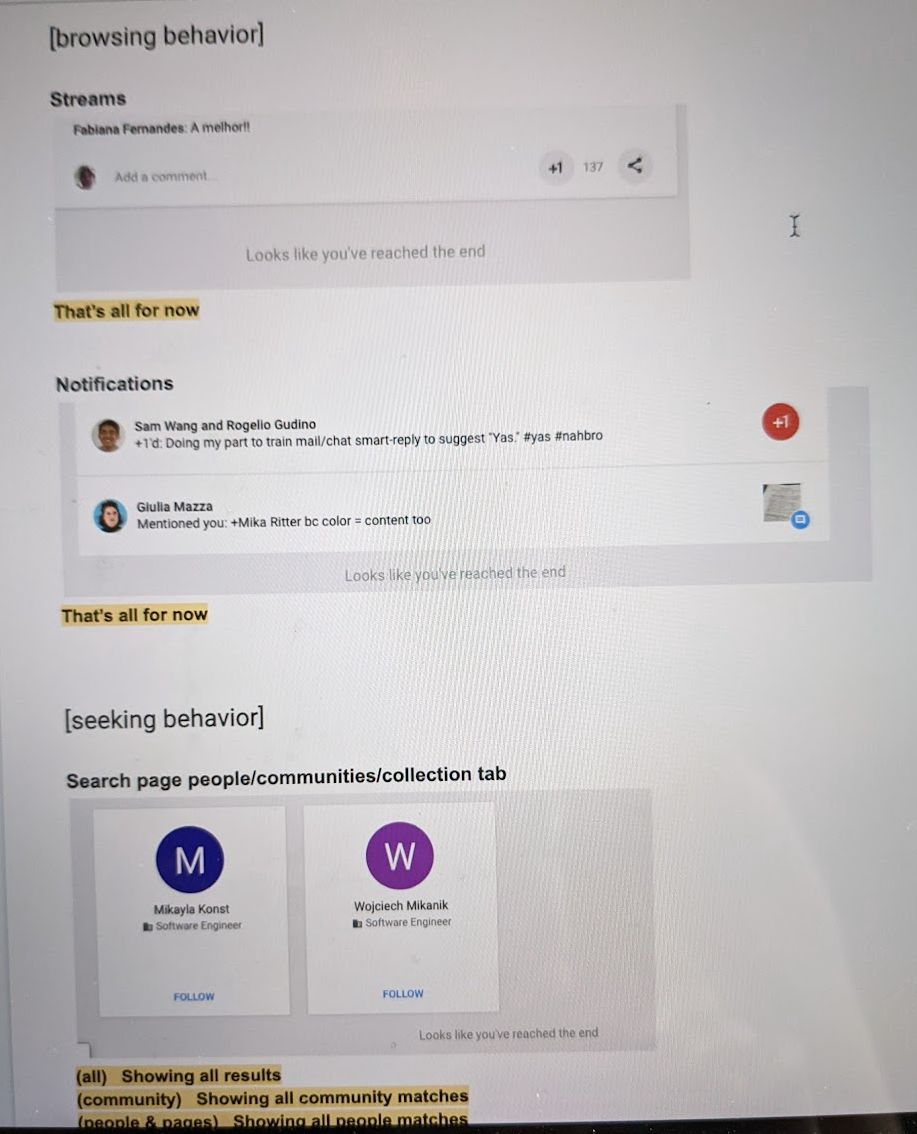
  • Browsing behavior (Streams & Notifications): Use “That’s all for now”—concise, neutral-positive phrasing instead of “Looks like you’ve reached the end.”
  • Seeking behavior (Search results, Activity log, & Member lists): Use “Showing all [results / community matches / people matches / members]” to confirm completeness clearly.

5. Naming Workshop: “Streams” vs. “Feeds”

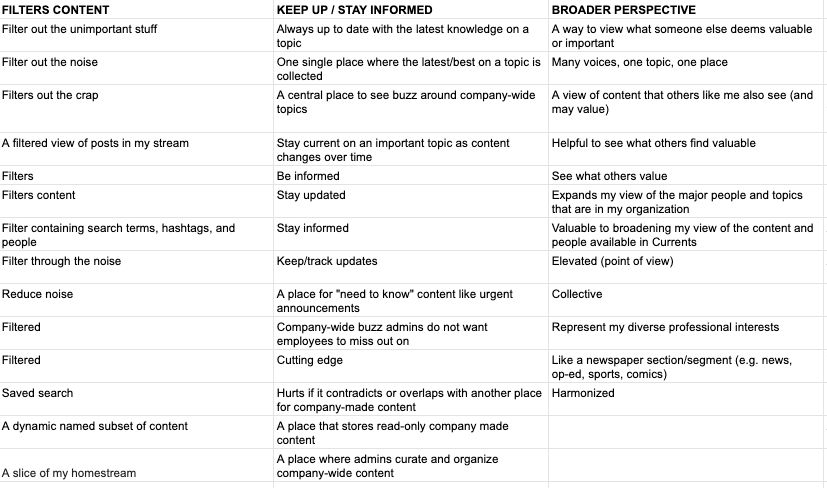
Early in Currents’ development, I conducted hallway testing on the term streams and facilitated a cross-functional design-sprint naming workshop with UX Design, UX Research, and PM—clustering participant feedback across Stay Informed / Filters Content, Focused / Organized, and Broader Perspective to validate keeping the name streams.
Naming workshop clustering spreadsheet
Design-Sprint Naming Workshop Clustering Data Mapping user mental models across Filtering, Staying Informed, and Broader Perspective.
← Back to Portfolio

Product Lifecycle: Shutting Down Google+ & Spaces

Guiding millions of consumer, enterprise, and developer accounts through the Google+ and Google Spaces sunsets with clarity, empathy, and precision.

Company & TimelineGoogle (2016 – April 2019)
RoleShutdown Communications UX Writer
WorkstreamsConsumer, Enterprise, Developer, & Internal
StakeholdersLegal, Privacy, PR, PM, & Executive Leadership

Coordinating Sunset Communications Across Four Workstreams

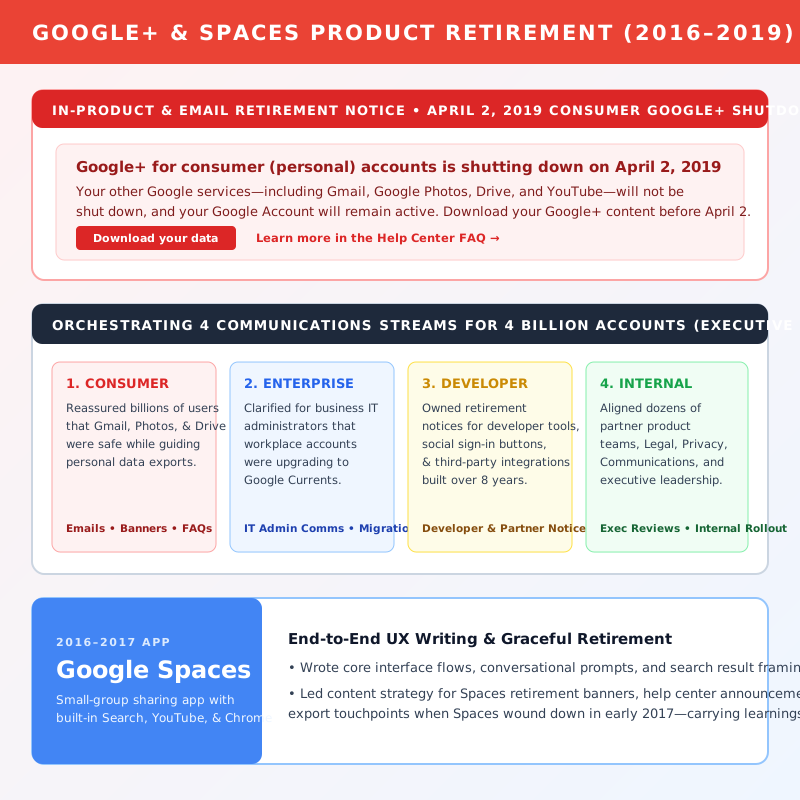
Because Google+ had been connected to Google accounts for years, many users worried that the consumer Google+ sunset meant losing access to Gmail, Google Photos, or YouTube.

Working closely with Legal, Privacy, PR, PM, Engineering, and executive leadership, I wrote and coordinated product communications for the consumer Google+ sunset (completed April 2019) and the earlier Google Spaces sunset across four workstreams:

  • Consumer: Reassuring emails, in-product notices, and Help Center FAQs explaining how to export Google+ data via Takeout while confirming that Gmail, Photos, and Drive were unaffected.
  • Enterprise: Communicating to G Suite admins and organizations that enterprise accounts were continuing and transitioning to Google Currents.
  • Developer / 3rd Party: Clear deprecation timelines for Google+ APIs and OAuth integrations.
  • Internal: Aligning messaging across partner product teams.
Google+ Shutdown Banner, 4-Workstream Matrix, and Google Spaces Sunset
Consumer Google+ & Spaces Sunset Architecture Click image to inspect the 4-workstream breakdown and sunset banner copy.
← Back to Portfolio

Allrecipes: +25% Sign-Up Lift, 2015 Redesign Overlays, & Dinner Spinner

Collaborating on a registration redesign that drove a 25% lift in sign-up starts, onboarding home cooks to the redesigned platform, and A/B testing email campaigns to 4.17M subscribers.

Company & TimelineAllrecipes • Seattle, WA (Sep 2013 – Apr 2016)
TitleSenior UI Writer (UX)
Registration Test Impact+25% Lift in Registration Starts
Email A/B Test Impact4.17M Sent • 27.47% Open Rate • 17.77% CTR

1. Language Updates to Improve Sign-Up Rates (+25% Lift in Registration Starts)

Research question: Within the desktop navigation and registration modal, which call-to-action and flow best encourages new users to register while keeping sign-in accessible for returning members?

Top-Nav CTA Variant Strengths (Pros) UX & Conversion Considerations (Cons)
Sign up or Sign in Straightforward and familiar for returning registered users. Doesn’t communicate the value of joining; “Sign up” can imply a paid subscription.
Create a profile Consistent with account navigation and implies a personalized experience. Can blur the distinction between creating an account and signing in.
Join Allrecipes Welcoming, community-focused, and aligned with the brand. Works best when paired with “Join for free!” so users know membership is free.

The Winning Registration Flow Redesign (+25% Lift)

Our product designer and I partnered to test defaulting anonymous visitors to a streamlined “Join Allrecipes” view with a clear value proposition:
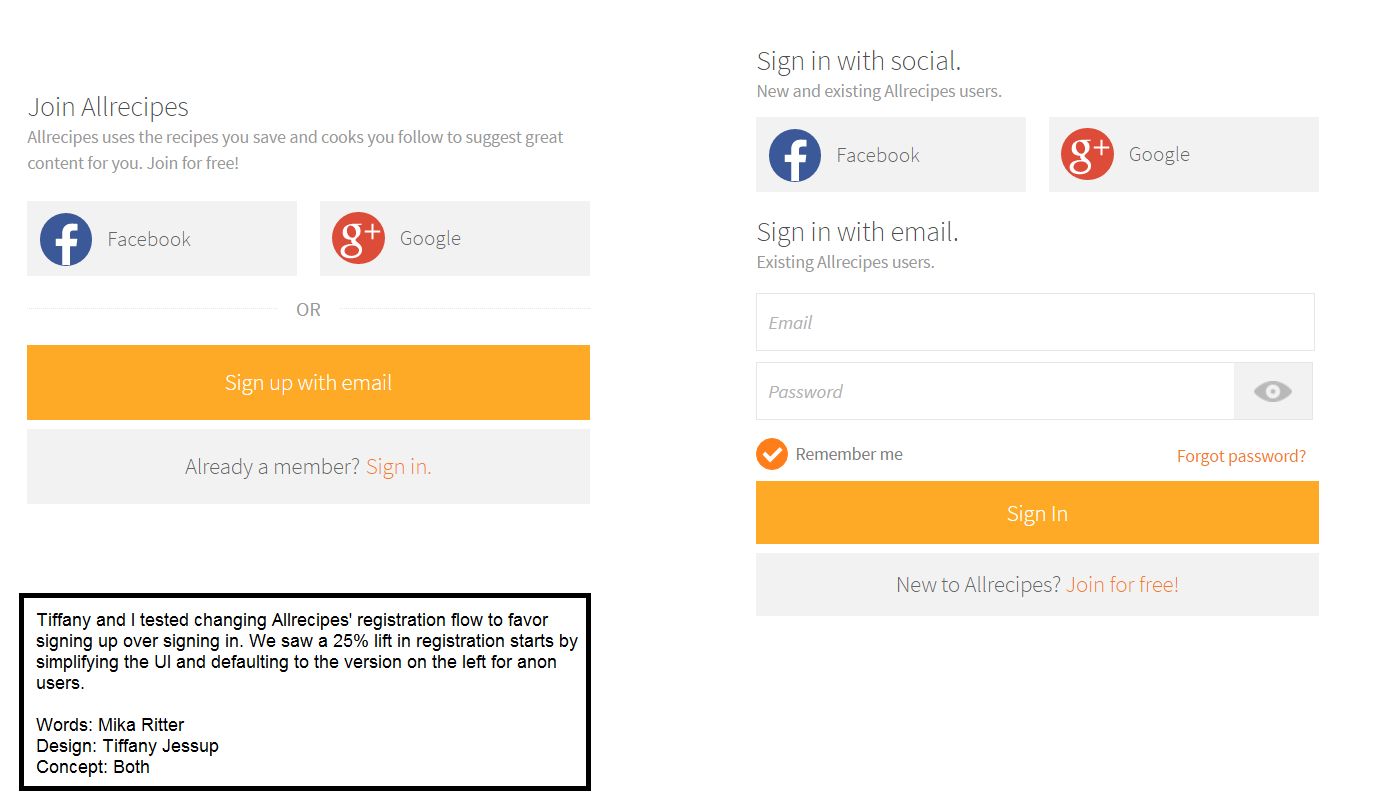
“Allrecipes uses the recipes you save and cooks you follow to suggest great content for you. Join for free!”

Result: Simplifying the UI and defaulting to this view for anonymous users drove a 25% lift in registration starts.
Allrecipes Join Allrecipes vs Sign In registration flow comparison
Original Artifact: Registration Flow A/B Test (+25% Lift) Words: Mika Ritter • Design: Product Design Partner • Concept: Collaborative (click to zoom).

2. Overlays & User Education (2015 Site Redesign)

To introduce home cooks to the redesigned Allrecipes social feed and profile experience, our team created concise educational overlays and contextual callouts:
Calling all cooks welcome modal
Welcome Modal: “Calling all cooks” “Welcome to the new Allrecipes, where the food you like and friends you follow help us suggest more delicious dishes just for you.”
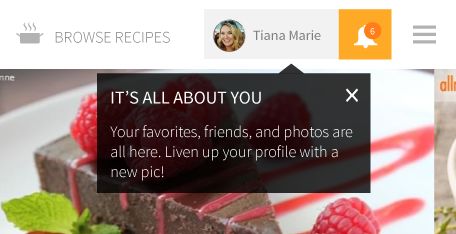
It's all about you profile tooltip
Profile Tour: “It’s All About You” “Your favorites, friends, and photos are all here. Liven up your profile with a new pic!”
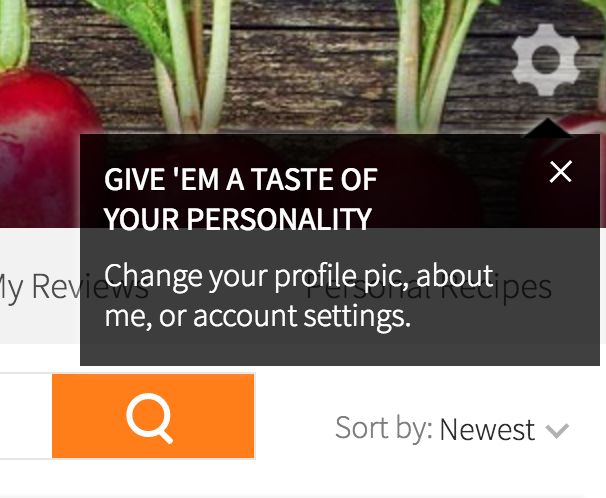
Give 'em a taste of your personality tooltip
Settings Callout: “Give ’Em a Taste of Your Personality” “Change your profile pic, about me, or account settings.”

3. Copywriting & A/B Testing: “the SCOOP” Breakfast Email Campaign

Alongside UI writing, I collaborated with the email marketing and design teams to write campaign copy and A/B test subject lines across millions of subscribers:
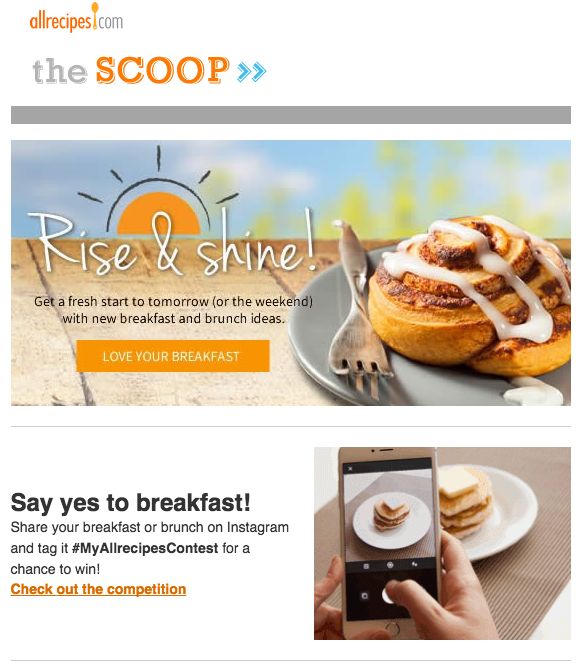
Rise & shine! Say yes to breakfast email hero
Hero & Social Contest “Rise & shine!” + “Say yes to breakfast! Tag #MyAllrecipesContest”
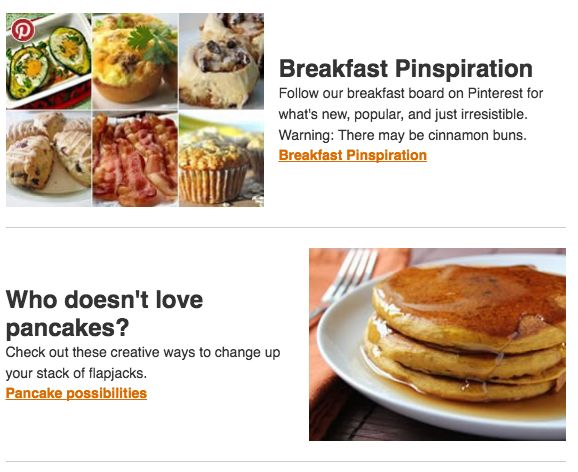
Breakfast Pinspiration and Who doesn't love pancakes?
Pinterest & Flapjacks “Breakfast Pinspiration — Warning: There may be cinnamon buns.”
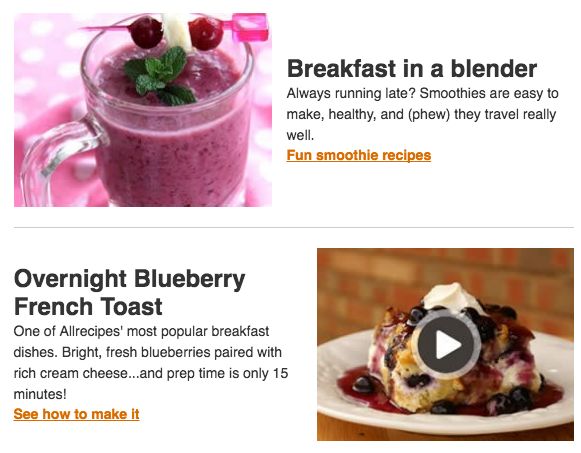
Breakfast in a blender and Overnight Blueberry French Toast
Smoothies & Video Recipes “Breakfast in a blender” & “Overnight Blueberry French Toast”
Version Winning Subject Line Sent Opens Open Rate Clicks CTR
Version C Best. Breakfast. Ever. 4,171,500 1,146,006 27.47% 203,609 17.77%

4. Allrecipes Dinner Spinner (iOS & Android), Style Guide, & Cookware

  • Allrecipes Dinner Spinner (iOS & Android): Wrote UI copy for the mobile app’s 3-reel recipe spinner, personalized feeds, and in-app features.
  • Allrecipes UI Writing Style Guide: Authored the UI style guide to align terminology across web and mobile teams.
  • Cooking School, Video Spots, & Branded Cookware: Contributed copy for branded cookware packaging, Cooking School courses, and usability study scripts.
Allrecipes Dinner Spinner and Style Guide Summary
← Back to Portfolio

Nintendo of America: Animal Crossing: New Leaf & Style Savvy

Collaborating at Nintendo Treehouse to adapt character voices, cultural nuances, and thousands of lines of dialogue for Nintendo 3DS titles.

Company & TimelineNintendo of America • Redmond, WA (May 2012 – Apr 2013)
TitleAssociate Localization Writer
Shipped TitlesAnimal Crossing: New Leaf & Style Savvy: Trendsetters
Official CreditCredited as Michaela Ritter (NOA Localization)

Character Voice & Cultural Adaptation at Nintendo Treehouse

As an Associate Localization Writer at Nintendo of America, I worked with a team of writers, translators, and QA testers to adapt two Nintendo 3DS titles for North American players:
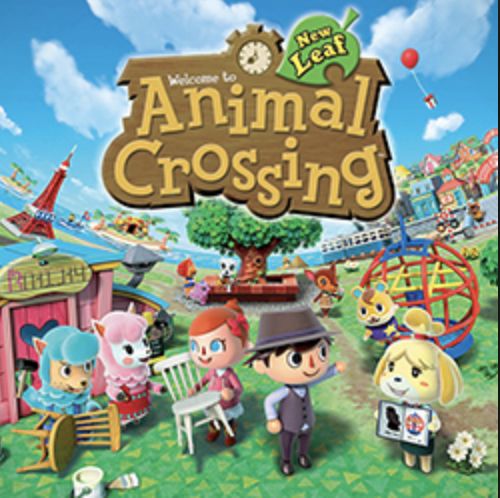
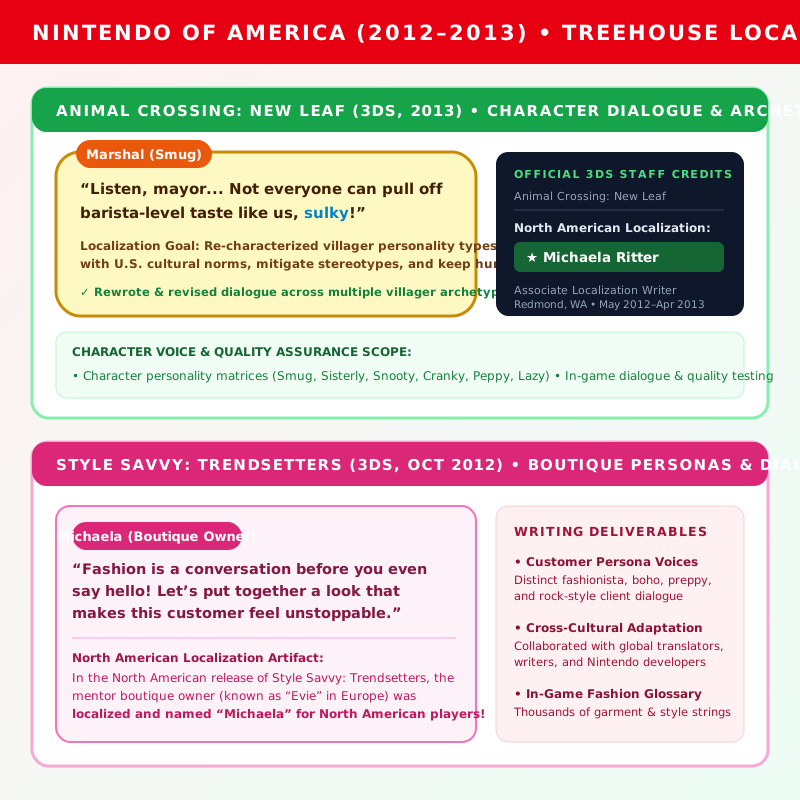
  • Animal Crossing: New Leaf (Nintendo 3DS, Released June 2013): Collaborated on re-characterizing select animal personality types to fit North American cultural expectations and avoid stereotypes. Wrote and revised dialogue across multiple villager archetypes and key characters.
  • Style Savvy: Trendsetters (Nintendo 3DS, Released October 2012): Localized boutique fashion scenarios, customer personas, and styling dialogue (where the player’s boutique mentor was localized for North America as “Michaela”).
  • Post-Localization QA: Tested builds in context to resolve text overflow, pacing, variable handling, and tonal consistency.
Animal Crossing: New Leaf Box Art
Animal Crossing: New Leaf (Nintendo 3DS) Over 13 million copies sold worldwide; credited as Michaela Ritter in the Nintendo of America localization staff roll.
Nintendo Localization Artifact for Animal Crossing: New Leaf and Style Savvy: Trendsetters
Nintendo 3DS Localization & Credits Artifact Click image to inspect the New Leaf villager dialogue and credits and the Style Savvy: Trendsetters localization detail.
← Back to Portfolio

WildTangent: FATE: The Cursed King & Global OEM Campaigns

Five years of narrative scriptwriting, A/B-tested email marketing, OEM partnerships (HP, Toshiba, Acer, and T-Mobile), and 10-language localization.

Company & TimelineWildTangent • Redmond, WA (Jul 2007 – May 2012)
RolesCreative Services Lead, Sr. Writer, & Support Mgr
Shipped Game ScriptFATE: The Cursed King (Released March 2011)
Global Scope10 Languages + HP/WT Brazil Campaigns

From Global Support Manager to Creative Services Lead & Scriptwriter

I joined WildTangent in 2007 as Global Customer Support Manager—building the customer support site and internal knowledgebase and coordinating support localization—before moving into Senior Marketing and Web Writer and Creative Services Group Lead:
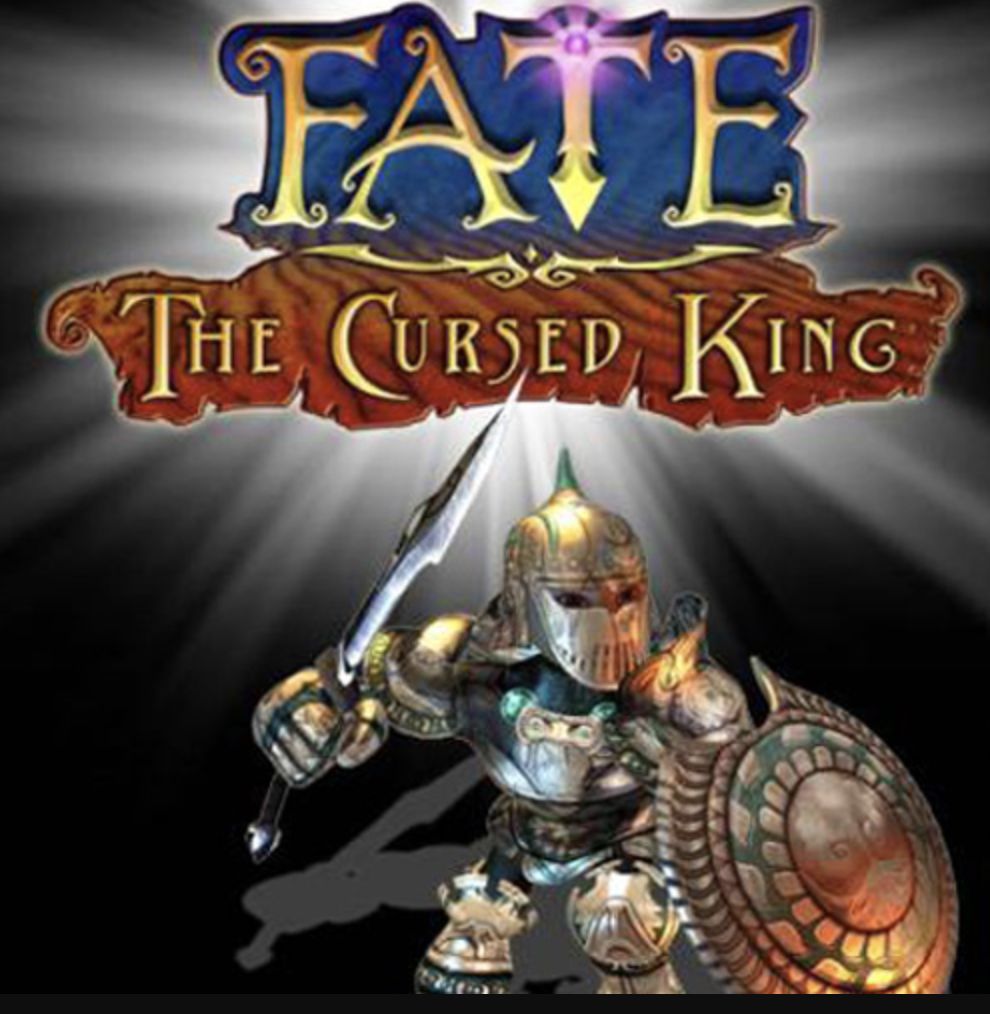
  • Scriptwriter for FATE: The Cursed King (2011): Wrote the game script, realm lore, quest dialogue, and launch collateral in partnership with the game development team.
  • Global OEM Partnerships: Served as creative liaison for partnerships with HP, Acer, Toshiba, and T-Mobile, including joint WildTangent and HP campaigns in Brazil.
  • WildTangent Style Guide & Storefront Copy: Authored the company style guide and wrote game descriptions, UI messages, newsletters, and promotional campaigns.
  • A/B Testing & 10-Language Localization: Managed email planning, A/B testing, and localization across 10 languages.
FATE: The Cursed King Box Art
FATE: The Cursed King (2011) Official key art for FATE: The Cursed King, for which I wrote the game script and launch collateral.
WildTangent and FATE: The Cursed King Artifact
FATE: The Cursed King Script & OEM Localization Artifact Click image to enlarge.